Extended Engine Life Through Superior Thermal Protection
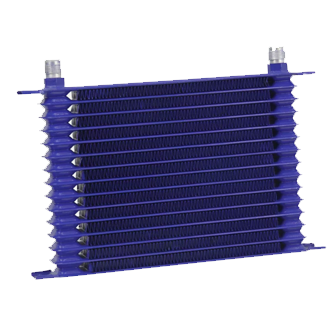
The primary value proposition of a car oil cooler centers on its ability to dramatically extend engine lifespan by maintaining optimal lubrication conditions under all operating scenarios. Engine longevity depends fundamentally on the quality of lubrication provided to internal components, and oil quality directly correlates with temperature management. When oil temperatures exceed manufacturer specifications, chemical additives that prevent oxidation, resist foaming, and suspend contaminants begin to fail. These additives represent sophisticated chemistry designed to function within specific temperature windows. Once thermal limits are breached, additive packages deplete rapidly, leaving base oil vulnerable to breakdown. The car oil cooler prevents this cascade of failures by intercepting heat before it compromises lubricant integrity. Consider the metallurgical reality of engine construction: bearings, cylinder walls, and valve train components operate with clearances measured in thousandths of inches. These microscopic gaps depend on oil film strength to prevent metal-to-metal contact. Hot oil loses viscosity, thinning to the point where it can no longer maintain adequate film thickness under pressure. The result is boundary lubrication, where surfaces touch despite the presence of oil, causing wear that accumulates over time. A properly sized car oil cooler maintains viscosity within the range where hydrodynamic lubrication occurs reliably, keeping surfaces separated by robust fluid barriers. This protection becomes especially critical during sustained high-load operation such as mountain driving, trailer towing, or spirited performance driving. Standard cooling systems focus primarily on managing coolant temperature, often leaving oil temperature as a secondary concern. However, oil typically runs hotter than coolant, sometimes by significant margins. This temperature differential means that even when coolant gauges show normal readings, oil may be approaching or exceeding safe limits. The car oil cooler addresses this gap by providing dedicated thermal management for lubrication systems. Real-world testing demonstrates that vehicles equipped with oil coolers show measurably less wear on critical components after equivalent mileage compared to uncooled counterparts. Bearing surfaces retain their original finish longer, piston rings maintain better sealing, and timing chain stretch occurs more slowly. These microscopic improvements compound over tens of thousands of miles, ultimately determining whether an engine reaches 200,000 miles or requires major repairs at 100,000 miles.