
 EN
EN
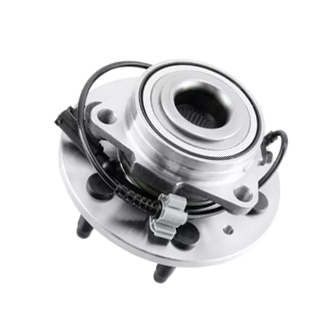
High-speed applications across automotive, aerospace, and industrial machinery demand components that can withstand extreme rotational velocities while maintaining dimensional stability and operational reliability. Precision hub bearings emerge as fundamental elements in these demanding environments, where even microscopic variations in manufacturing tolerances can cascade into catastrophic system failures. Understanding why precision hub bearings are critical in high-speed applications requires examining the unique mechanical stresses, thermal dynamics, and operational requirements that distinguish high-velocity systems from conventional machinery.
The relationship between bearing precision and high-speed performance becomes evident when considering the physics of rotational motion at elevated velocities. As rotational speeds increase, centrifugal forces amplify any existing imbalances exponentially, transforming minor imperfections into sources of destructive vibration and premature wear. Precision hub bearings address these challenges through meticulously controlled manufacturing processes that minimize dimensional variations and ensure consistent performance under extreme operating conditions.
Mechanical Stress Management in High-Speed Environments
Centrifugal Force Amplification Effects
High-speed applications subject precision hub bearings to centrifugal forces that increase quadratically with rotational velocity. At speeds exceeding 10,000 RPM, these forces can generate internal stresses that approach the material limits of conventional bearing components. Precision hub bearings counteract these effects through specialized cage designs and optimized ball or roller geometries that distribute loads more uniformly across bearing surfaces. The critical nature of these design elements becomes apparent when considering that a 0.001-inch dimensional deviation at 15,000 RPM can generate vibration amplitudes sufficient to damage adjacent components.
The cage design in precision hub bearings plays a particularly crucial role in managing centrifugal stresses. Advanced materials such as polyamide composites or machined brass provide the necessary strength-to-weight ratios while maintaining dimensional stability under thermal cycling. These precision-engineered cages prevent ball or roller skidding, a phenomenon that becomes increasingly problematic as rotational speeds increase and can lead to rapid bearing degradation.
Dynamic Load Distribution Principles
Dynamic loading in high-speed applications differs fundamentally from static or low-speed conditions, requiring precision hub bearings to maintain load distribution accuracy under constantly changing force vectors. The precision manufacturing tolerances ensure that each rolling element maintains optimal contact with the raceway surfaces, preventing load concentration that could initiate fatigue cracking. This uniform load distribution becomes critical as operational speeds increase, where uneven loading can trigger harmonic vibrations that propagate throughout the mechanical system.
Precision hub bearings achieve superior dynamic load management through controlled preloading techniques that maintain optimal internal clearances regardless of thermal expansion or operational wear. The preload specifications are calculated to accommodate the specific thermal and mechanical conditions of high-speed operation, ensuring that bearing performance remains consistent throughout the operational envelope.
Thermal Management and Heat Dissipation Requirements
Friction-Generated Heat Challenges
High-speed operation generates substantial internal friction within bearing assemblies, creating thermal conditions that can compromise lubrication effectiveness and dimensional stability. Precision hub bearings address these thermal challenges through optimized surface finishes and specialized lubricant formulations designed for elevated temperature operation. The precision manufacturing process ensures minimal surface roughness, reducing friction coefficients and consequently limiting heat generation at critical contact points.
The thermal management capabilities of precision hub bearings become particularly important in applications where ambient cooling is limited or where continuous operation at high speeds is required. Advanced ceramic ball technology in some precision hub bearings further reduces friction and thermal generation while providing superior wear resistance compared to traditional steel components.
Thermal Expansion Compensation
Temperature variations in high-speed applications can cause differential thermal expansion between bearing components and housing materials, potentially altering critical internal clearances. Precision hub bearings incorporate design features that accommodate thermal growth while maintaining optimal operating clearances. This thermal compensation is achieved through careful material selection and geometry optimization that accounts for the thermal expansion coefficients of all bearing components.
The precision tolerances in hub bearings ensure that thermal expansion occurs predictably and uniformly, preventing the development of stress concentrations that could lead to premature failure. This thermal stability is particularly critical in automotive applications where precision hub bearings must perform reliably across extreme temperature ranges while maintaining consistent handling characteristics.
Vibration Control and Dynamic Stability
Resonance Frequency Management
High-speed rotating systems are susceptible to resonance phenomena that can amplify vibrations to destructive levels. Precision hub bearings contribute to system stability by providing consistent rotational characteristics that minimize excitation of natural frequencies within the mechanical assembly. The tight manufacturing tolerances ensure that bearing-induced vibrations remain within acceptable limits across the entire operating speed range.
The mass distribution within precision hub bearings is carefully controlled to avoid creating unbalanced conditions that could trigger resonance at critical operating speeds. This balance is maintained through precision manufacturing techniques that ensure uniform material distribution and consistent component weights within extremely tight tolerances.
Gyroscopic Effect Considerations
At high rotational speeds, gyroscopic effects become significant factors in system dynamics, particularly in applications involving directional changes or angular acceleration. Precision hub bearings must accommodate these gyroscopic forces while maintaining rotational accuracy and load capacity. The precision design characteristics enable these bearings to handle complex loading conditions that combine radial, axial, and moment loads simultaneously.
The stiffness characteristics of precision hub bearings are engineered to provide appropriate system response to gyroscopic loading while preventing excessive deflection that could compromise performance. This balance between stiffness and compliance is achieved through optimization of bearing geometry and preload conditions specific to high-speed operation requirements.
Lubrication Challenges and Solutions
High-Speed Lubrication Dynamics
Conventional lubrication methods often prove inadequate in high-speed applications, where centrifugal forces can displace lubricants from critical contact zones. Precision hub bearings address these challenges through specialized lubrication systems that ensure consistent film formation at elevated speeds. The precision surface finishes facilitate optimal lubricant adherence while promoting efficient heat transfer away from friction surfaces.
Advanced synthetic lubricants formulated specifically for high-speed precision hub bearings provide superior thermal stability and reduced volatility compared to conventional oils. These specialized lubricants maintain their protective properties across wide temperature ranges while resisting degradation under the shear stresses associated with high-speed operation.
Contamination Prevention Strategies
High-speed operation amplifies the detrimental effects of contamination, making seal integrity critical for precision hub bearings. Advanced sealing systems prevent the ingress of particulate matter while retaining lubricants under the centrifugal forces present in high-speed applications. The precision manufacturing of seal components ensures consistent contact pressure and reliable performance throughout the bearing service life.
The contamination resistance of precision hub bearings extends beyond physical sealing to include design features that minimize contamination retention. Smooth internal surfaces and optimized geometry reduce the likelihood of debris accumulation while facilitating contamination removal through normal operational motion.
FAQ
What speed ranges typically require precision hub bearings instead of standard bearings?
Precision hub bearings become critical in applications exceeding 5,000 RPM, though the exact threshold depends on load conditions and operating environment. In automotive applications, precision hub bearings are essential for vehicles designed for sustained high-speed operation, while industrial applications may require precision bearings at lower speeds if load conditions or environmental factors demand enhanced performance characteristics.
How do precision tolerances in hub bearings affect overall system performance?
Precision tolerances in hub bearings directly influence rotational accuracy, vibration levels, and load distribution throughout the mechanical system. Tighter tolerances result in reduced runout, minimized vibration transmission, and more predictable performance characteristics. This precision becomes increasingly important as system complexity increases and performance requirements become more stringent.
What are the primary failure modes of precision hub bearings in high-speed applications?
The most common failure modes include fatigue spalling due to inadequate lubrication, cage failure from excessive centrifugal forces, and thermal degradation from insufficient heat dissipation. Precision hub bearings are specifically designed to resist these failure modes through advanced materials, optimized geometry, and enhanced lubrication systems that address the unique challenges of high-speed operation.
Can precision hub bearings operate without external cooling in high-speed applications?
While precision hub bearings incorporate advanced thermal management features, external cooling may still be necessary depending on operating conditions and application requirements. The improved heat dissipation characteristics of precision bearings extend the operational envelope, but sustained high-speed operation in demanding environments often benefits from supplementary cooling systems to ensure optimal performance and service life.
Table of Contents
- Mechanical Stress Management in High-Speed Environments
- Thermal Management and Heat Dissipation Requirements
- Vibration Control and Dynamic Stability
- Lubrication Challenges and Solutions
-
FAQ
- What speed ranges typically require precision hub bearings instead of standard bearings?
- How do precision tolerances in hub bearings affect overall system performance?
- What are the primary failure modes of precision hub bearings in high-speed applications?
- Can precision hub bearings operate without external cooling in high-speed applications?