
 EN
EN
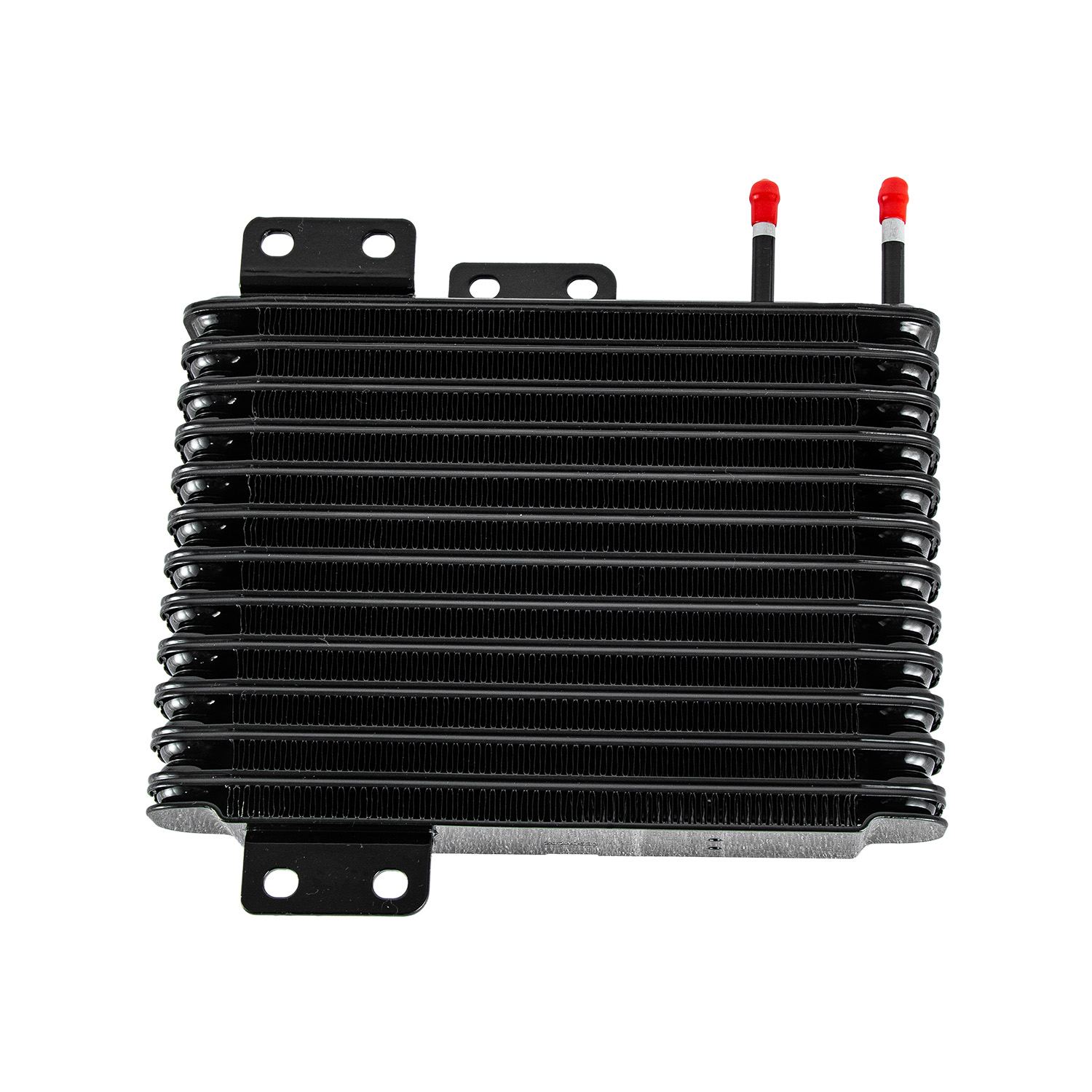
When sourcing an oil cooler in bulk, the decision goes far beyond price per unit. Procurement teams and fleet managers who skip a rigorous metric-based evaluation often end up with components that underperform in the field, generate warranty claims, or fail to match the thermal demands of specific engine and transmission configurations. Understanding which performance metrics actually matter — and why — is the foundation of a defensible bulk sourcing decision.
The oil cooler market offers a wide range of configurations — row counts, port sizes, core materials, and flow designs — and bulk buyers must cut through that variety with a structured evaluation framework. This article outlines the critical performance metrics that experienced procurement professionals use to qualify oil coolers before committing to high-volume orders, covering thermal efficiency, flow dynamics, material durability, dimensional compatibility, and pressure integrity. Getting these right at the specification stage prevents costly corrections downstream.
Thermal Efficiency as the Primary Selection Metric
Heat Dissipation Capacity and BTU Rating
The core job of any oil cooler is to transfer heat away from engine or transmission oil efficiently. When evaluating bulk orders, heat dissipation capacity — often expressed in BTUs per hour or kilowatts — is the most direct indicator of whether a unit will actually solve the thermal problem it is intended to address. A higher BTU rating means the oil cooler can handle greater thermal loads without the oil temperature exceeding safe operating limits.
Buyers should request standardized thermal performance data from suppliers rather than relying on informal product descriptions. This data should reflect performance at realistic operating conditions, including specific inlet oil temperatures, ambient air temperatures, and oil flow rates. A unit that performs well at controlled laboratory conditions but degrades rapidly under real-world variables offers limited value in volume purchasing contexts.
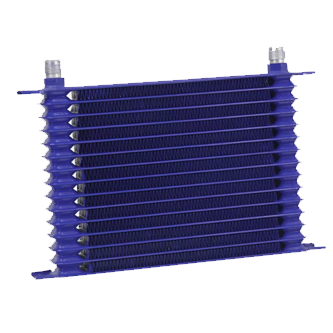
Row count has a direct relationship with heat dissipation. A 15-row oil cooler, for instance, provides significantly more surface area than a 9-row unit, which translates into greater cooling capacity. When sourcing in bulk for performance vehicles, heavy-duty equipment, or applications with sustained high-load cycles, higher row counts are typically the appropriate specification to prioritize.
Core Surface Area and Fin Density
Beyond row count, the geometric design of the oil cooler core — specifically its surface area and fin density — determines how efficiently the unit transfers heat to the surrounding airflow. A larger effective surface area exposed to air movement increases the rate of convective heat transfer. Fin density, measured in fins per inch, influences this further by controlling how much air passes through the core versus how much turbulence is generated.
When comparing oil cooler specifications for bulk procurement, request detailed core dimensions and fin count data. These numbers allow direct comparisons between units that may appear similar in catalog descriptions but differ substantially in actual thermal performance. High fin density can improve cooling but may also restrict airflow in installations with limited duct space, so the tradeoff must be evaluated in context of the intended application.
Aluminium cores are widely preferred in performance and automotive applications because aluminium conducts heat well, is lightweight, and resists corrosion. For bulk buyers specifying oil coolers for transmission or engine applications, an aluminium core construction is typically both the performance and cost-effective choice, provided the grade and wall thickness meet pressure and fatigue requirements.
Flow Rate and Pressure Drop Compatibility
Rated Oil Flow Capacity
An oil cooler that cannot accommodate the oil flow rate demanded by the engine or transmission will create a restriction in the lubrication circuit. This restriction can cause oil starvation, elevated system pressure, and accelerated component wear — outcomes that are unacceptable in any application and catastrophic in high-performance or commercial contexts. Rated oil flow capacity, typically expressed in liters per minute or gallons per minute, is therefore a non-negotiable metric in bulk sourcing.
Buyers should cross-reference the oil flow specifications of the target application against the rated capacity of the oil cooler being considered. The oil cooler should handle the maximum expected flow rate with margin to spare, accounting for viscosity changes across operating temperature ranges. Cold-start conditions, where oil is significantly more viscous, can produce flow spikes that an undersized oil cooler may not tolerate without pressure side effects.
Port size is directly linked to flow capacity. A 10AN port, for example, is a common specification in performance automotive and light industrial oil cooler applications. It provides a balance between flow volume and practical installation flexibility. When ordering in bulk, confirming that port size matches the fittings, hoses, and adapters already in use across a fleet or product line avoids costly retrofit work at the assembly stage.
Internal Pressure Drop Across the Core
Every oil cooler introduces some resistance to oil flow as the fluid passes through the internal passages of the core. This resistance is quantified as pressure drop, measured in PSI or bar at a given flow rate. A high pressure drop reduces oil system efficiency and can trigger oil pressure warning thresholds in monitored systems. When evaluating oil cooler options for bulk sourcing, lower pressure drop at the required flow rate is generally preferable, all else being equal.
Suppliers should be able to provide pressure drop curves rather than single-point data, since pressure drop varies with flow rate and oil viscosity. Evaluating this data across the expected operating range gives procurement teams confidence that the oil cooler will not introduce unacceptable system penalties under any foreseeable operating condition.
Internal passage design — whether the unit uses a plate-and-fin, tube-and-fin, or stacked plate architecture — significantly affects both flow resistance and heat transfer efficiency. For high-volume sourcing, understanding the core architecture helps buyers predict how a given oil cooler will perform across diverse installation environments.
Material Quality and Long-Term Durability Metrics
Alloy Grade and Wall Thickness Standards
In bulk procurement, individual unit failure rates have a compounding effect on total cost of ownership. A batch of oil coolers with marginal wall thickness or inconsistent alloy quality may pass initial inspection but fail prematurely under thermal cycling, vibration, or pressure fluctuations. Establishing material quality benchmarks before placing a bulk order is therefore a risk management priority, not a technical formality.
For aluminium oil coolers, the alloy grade used in core construction affects both strength and corrosion resistance. Industrial-grade aluminium alloys with established mechanical property certifications offer predictable performance across temperature extremes. Buyers sourcing in volume should request material certifications or mill test reports to verify that the alloy specification is consistent across production batches.
Wall thickness at fittings, end tanks, and core tubes determines burst pressure resistance and resistance to fatigue cracking under cyclic loading. A minimum wall thickness specification should be established for each application and enforced through incoming inspection protocols. This is especially important in transmission oil cooler applications where pressure pulses are frequent and temperatures can swing significantly during driving cycles.
Surface Treatment and Corrosion Resistance
Corrosion resistance is a durability metric that is easy to overlook during initial sourcing but becomes highly consequential over a product's service life. An oil cooler exposed to road salt, moisture, and thermal cycling without adequate surface protection will develop external corrosion that degrades structural integrity and can eventually compromise internal passages. For fleet and OEM procurement, this translates directly into warranty exposure and replacement costs.
Anodizing, powder coating, and other surface treatments applied to aluminium oil coolers extend service life by providing a protective barrier against oxidation and chemical attack. When evaluating bulk supply options, ask suppliers to specify what surface treatments are applied, to what thickness, and under what adhesion or salt-spray test standards. This information helps differentiate between oil coolers that merely look similar in product photography and those that are engineered for long service intervals.
Fittings and port hardware deserve particular attention. Dissimilar metal corrosion between aluminium bodies and steel or brass fittings is a known failure mode. Suppliers who address this risk through material selection, thread sealants, or isolating coatings demonstrate a higher level of engineering maturity that is worth weighing in bulk sourcing decisions.
Dimensional Compatibility and Installation Metrics
Overall Dimensions and Mounting Configuration
An oil cooler that does not physically fit the intended installation space or mounting configuration creates immediate procurement failure, regardless of how well it performs thermally. For bulk buyers serving multiple vehicle platforms, equipment lines, or product families, dimensional compatibility must be assessed across the full range of target applications before locking in a supplier.
Core dimensions — height, width, and depth — determine whether the oil cooler can be mounted in the available space without interference with adjacent components, airflow paths, or structural members. Universal-fit oil coolers offer flexibility across applications but may require additional bracketing or hose routing work. Application-specific units fit more precisely but limit the buyer's ability to consolidate SKUs across a diverse product line.
Mounting bracket design and hardware compatibility are practical metrics that are often underweighted during initial specification. A bulk order of oil coolers that arrives without appropriate mounting hardware, or with brackets that do not match standard fastener patterns, creates assembly line delays and incremental cost. Confirm mounting hardware inclusion and bracket specifications as part of the order qualification process.
Port Orientation and Hose Routing Flexibility
Port orientation — whether the inlet and outlet are positioned at the top, bottom, side, or in a specific angular arrangement — affects how cleanly hoses or hard lines can be routed within a given installation. A poorly oriented oil cooler forces hose runs into sharp bends, increases the risk of chafing, and can create air pockets in the oil circuit that reduce cooling efficiency. For high-volume production or fleet maintenance contexts, port orientation consistency across a batch is equally important.
When sourcing in bulk across multiple applications, buyers sometimes request oil coolers with rotatable or adjustable port configurations. This flexibility reduces the number of distinct part numbers that need to be stocked while still accommodating varied installation geometries. Verify with the supplier whether ports can be repositioned without compromising sealing integrity or structural strength.
Thread type and port standard — whether AN, NPT, BSP, or metric — must match the fittings ecosystem already in use in the target application. A mismatch requires adapters that add cost, potential leak points, and assembly complexity. Standardizing on a single port type across a bulk order simplifies inventory and reduces installation error rates.
Pressure Rating and Quality Certification Standards
Maximum Working Pressure and Burst Pressure
Every oil cooler specification sheet should state a maximum working pressure and, ideally, a burst pressure rating. The maximum working pressure defines the upper limit of normal operating pressure the unit is designed to sustain continuously. The burst pressure is the threshold at which the unit is expected to fail catastrophically, and it should be significantly higher than the working pressure to provide a meaningful safety margin.
For engine oil applications, typical system pressures range from 40 to 80 PSI at operating temperature, with cold-start spikes potentially exceeding 100 PSI in some high-performance engines. The oil cooler selected for bulk procurement must be rated to handle these peak pressures without deformation, leakage, or joint failure. Transmission applications may present different pressure profiles, and buyers should evaluate oil coolers against the specific hydraulic characteristics of the transmission system in question.
Hydrostatic pressure testing during incoming inspection is a practical quality gate for bulk orders. Random sampling of units from each batch and pressure-testing them to a defined multiple of working pressure provides statistical confidence in the batch's integrity before units are released for production or distribution. This protocol should be established as a standard quality requirement in the supply agreement.
Quality Certification and Batch Traceability
For procurement teams managing large-scale orders, the ability to trace a specific oil cooler back to its production batch, raw material lot, and inspection record is a quality management requirement, not a luxury. Batch traceability allows rapid identification and containment of defective units if a field problem is discovered after distribution, limiting warranty exposure and protecting end customers.
ISO 9001 certification by the supplier is a widely recognized baseline indicator of process discipline. While certification does not guarantee perfect product quality, it does indicate that the supplier operates systematic quality controls, maintains documentation, and is subject to third-party audits. For high-volume oil cooler procurement, this certification should be treated as a minimum threshold, with additional product-specific quality requirements negotiated on top.
Documentation packages accompanying bulk oil cooler shipments should include dimensional inspection reports, pressure test records, and material certifications. Establishing these documentation requirements upfront in the purchase agreement, and enforcing them consistently, ensures that the oil cooler supply chain operates to a standard that supports both quality control and regulatory compliance where applicable.
FAQ
What row count should I specify when ordering an oil cooler in bulk for performance applications?
Row count determines the heat dissipation surface area of the oil cooler. For performance engines or transmissions operating under sustained high loads, a higher row count — such as 15 rows — is generally appropriate because it provides greater thermal capacity. For lighter-duty or space-constrained applications, a lower row count may be sufficient. The correct specification depends on the maximum thermal load of the application, available installation space, and airflow conditions at the mounting location. Always request thermal performance data from the supplier to validate the row count against actual application requirements.
How do I evaluate pressure drop specifications when comparing oil cooler options?
Pressure drop should be evaluated using flow curve data provided by the supplier rather than a single value. Request pressure drop measurements at multiple flow rates that bracket the expected operating range of your application. Lower pressure drop at the required flow rate is generally preferable, but very low pressure drop may sometimes indicate insufficient internal passage contact area and reduced heat transfer efficiency. The goal is to find the oil cooler that delivers the required thermal performance with the minimum acceptable impact on oil circuit pressure.
Is aluminium the right core material for all bulk oil cooler applications?
Aluminium is the dominant choice for engine and transmission oil coolers in automotive and light industrial applications because it combines good thermal conductivity, low weight, and reasonable corrosion resistance. However, applications involving highly aggressive fluid chemistries, extreme vibration environments, or very high operating pressures may require consideration of alternative materials or protective treatments. For most standard bulk sourcing scenarios involving engine oil and transmission fluid cooling, an aluminium core oil cooler with appropriate surface treatment will deliver reliable performance across the expected service life.
What quality documentation should I require when placing a bulk oil cooler order?
At minimum, bulk orders should be accompanied by dimensional inspection reports confirming that units conform to specified tolerances, hydrostatic pressure test records demonstrating that sampled units meet rated working pressure requirements, and material certifications or mill test reports verifying alloy grade. Supplier ISO 9001 certification provides additional confidence in process consistency. Batch or lot traceability documentation is strongly recommended, as it enables targeted recall or containment actions if a field issue is identified after distribution. These requirements should be specified in the purchase agreement rather than requested informally after an order is placed.
Table of Contents
- Thermal Efficiency as the Primary Selection Metric
- Flow Rate and Pressure Drop Compatibility
- Material Quality and Long-Term Durability Metrics
- Dimensional Compatibility and Installation Metrics
- Pressure Rating and Quality Certification Standards
-
FAQ
- What row count should I specify when ordering an oil cooler in bulk for performance applications?
- How do I evaluate pressure drop specifications when comparing oil cooler options?
- Is aluminium the right core material for all bulk oil cooler applications?
- What quality documentation should I require when placing a bulk oil cooler order?