
 EN
EN
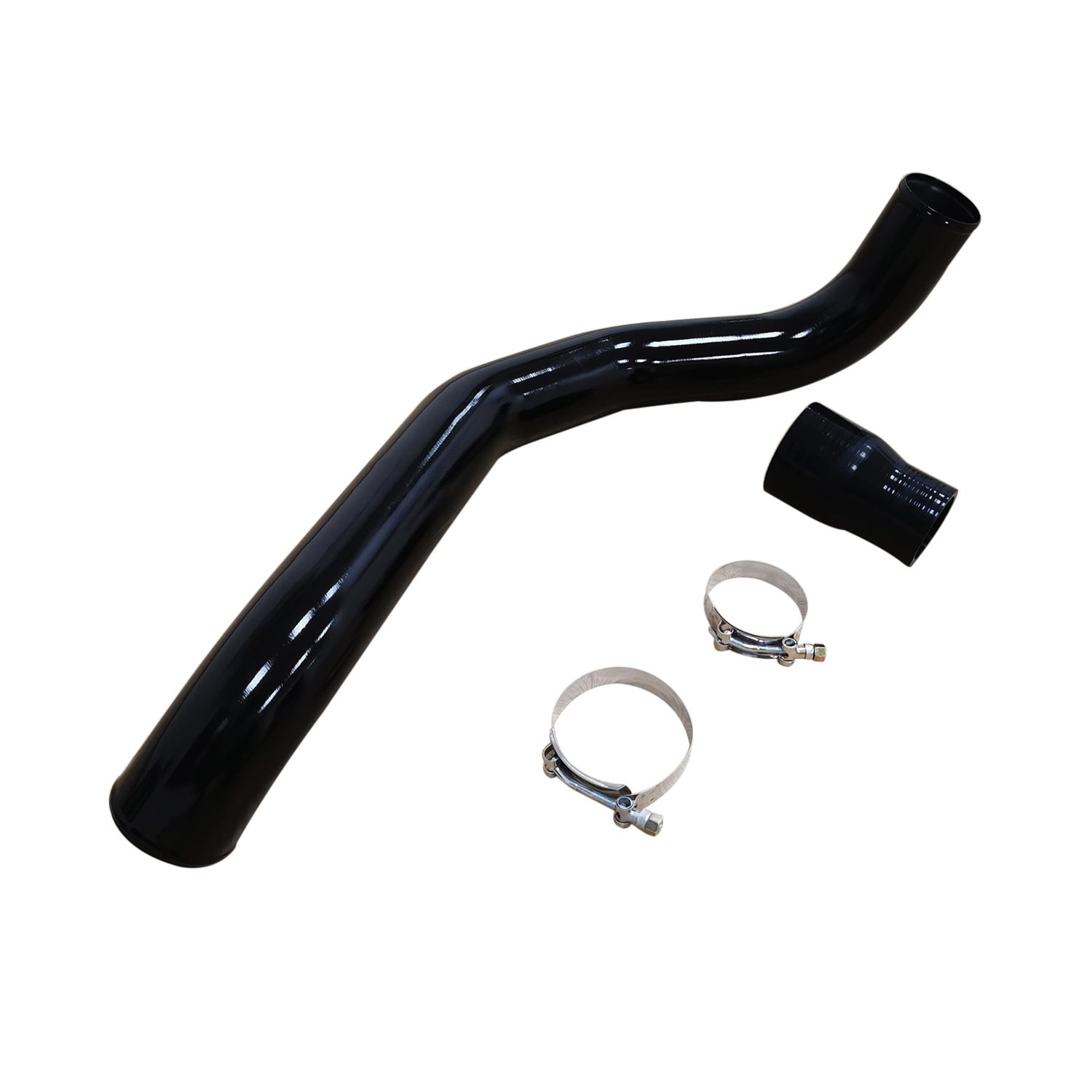
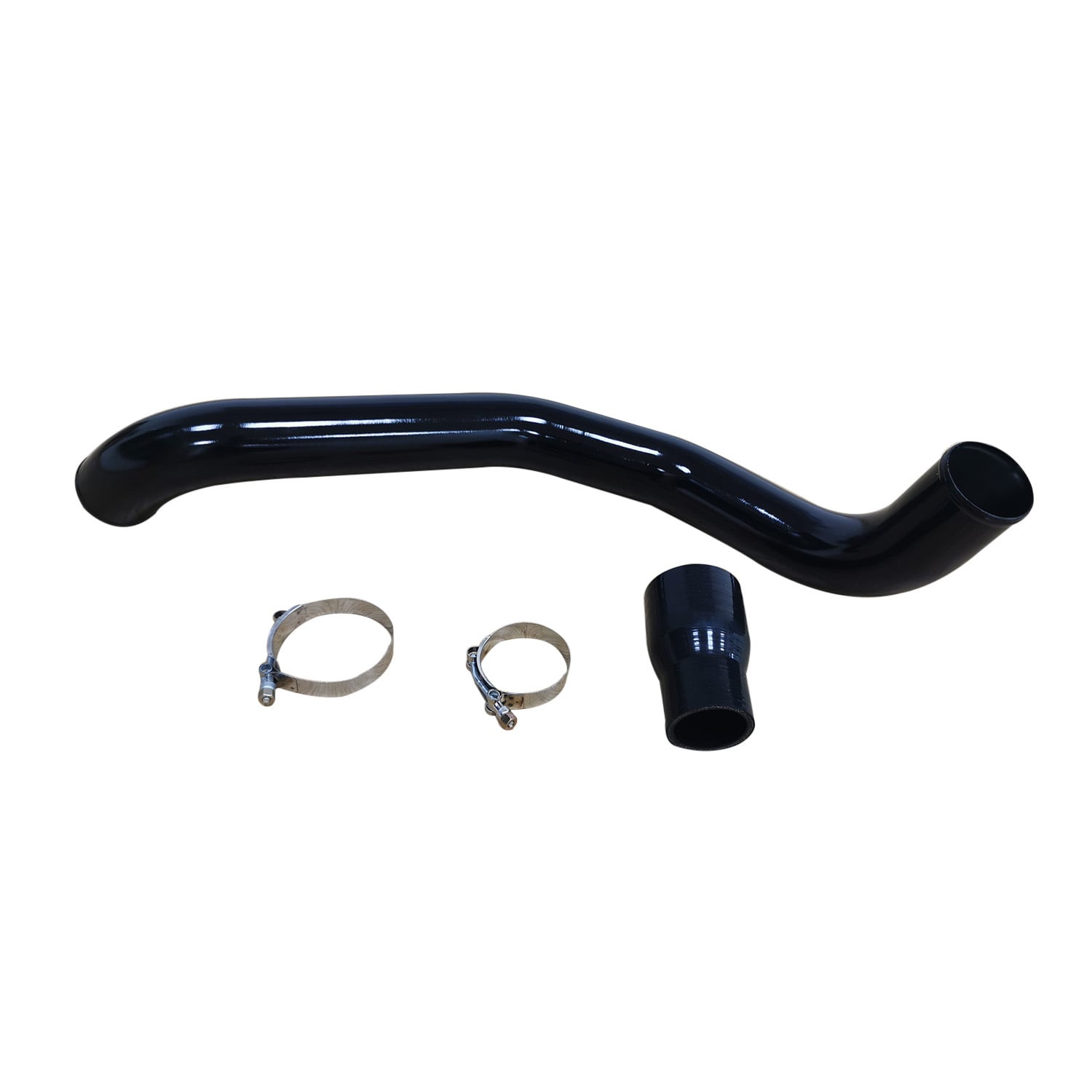
In modern turbocharged diesel and petrol engines, the intercooler tube plays a critical role in transferring compressed, charge-cooled air from the turbocharger to the engine intake. When one of these components fails under high thermal and mechanical stress, the consequences range from reduced engine performance to complete drivetrain failure. For vehicle manufacturers and aftermarket suppliers producing components at scale, the challenge is not simply building a reliable intercooler tube — it is ensuring that every single unit coming off a production line meets the same performance standard as the first prototype that passed engineering validation.
Achieving consistent quality across large production runs requires a disciplined, multi-stage testing methodology. Every intercooler tube must be evaluated not just for dimensional accuracy but for pressure integrity, material durability, thermal resistance, and long-term fatigue performance. This article explores how structured quality testing protocols work at scale, why each test method matters, and what engineering outcomes these procedures ultimately protect.
Understanding What Scale Reliability Actually Means
The difference between prototype testing and production-level assurance
A prototype intercooler tube can be hand-crafted, hand-inspected, and validated under controlled laboratory conditions. At scale, however, you are producing hundreds or thousands of units daily, each dependent on raw material consistency, tooling precision, and process repeatability. Reliability at scale means statistical confidence — not just that most units will perform correctly, but that the failure rate remains within an acceptable tolerance across the entire production batch.
Production-level quality assurance requires a shift from pass/fail testing of individual units to sampling strategies, process control monitoring, and statistical analysis. When a supplier claims that their intercooler tube product is production-validated, it should mean the entire manufacturing system — from raw material entry to final packaging — has been tested, mapped, and controlled to deliver consistent output.
Without this distinction, purchasers may receive products where the first batch performs well, but the fifth or tenth run shows dimensional drift, material inconsistency, or bonding failures. True scale reliability is built into the process, not just the product.
Why intercooler tube failure modes must define the test strategy
Before any testing protocol is designed, engineers must identify the realistic failure modes of an intercooler tube in service. Common failure modes include internal pressure burst at elevated temperatures, fatigue cracking at hose connection points, delamination of molded rubber-to-metal junctions, abrasion damage from contact with engine bay components, and oil contamination degrading the inner lining.
Each failure mode demands a specific test response. Pressure burst risk requires hydrostatic or pneumatic burst testing. Fatigue cracking demands cyclic pressure testing. Bonding integrity at couplings requires pull-force and torque testing. The logic is straightforward — the test suite must mirror the stress conditions the intercooler tube will face throughout its service life.
Suppliers who only test for one or two variables — typically burst pressure and dimensional fit — leave significant reliability gaps. A complete scale quality program maps every foreseeable failure mode and assigns a dedicated testing procedure to each one.
Core Mechanical and Pressure Testing Methods
Burst pressure and pressure cycle testing
The most fundamental test applied to any intercooler tube is burst pressure testing. Under this test, the tube is sealed and subjected to internal hydraulic or pneumatic pressure far exceeding normal operating levels — typically three to four times the maximum expected boost pressure. The unit must hold structural integrity through this event without rupture, deformation, or fitting ejection.
However, burst testing alone only validates peak strength. In real engine conditions, the intercooler tube experiences repeated pressure cycles as the engine accelerates, decelerates, and idles. Cyclic pressure testing subjects the tube to thousands of pressure rise-and-fall events, simulating years of normal driving behavior within a compressed test window. Any fatigue weakness at joints, bends, or molded sections will manifest during this stage.
At production scale, not every unit can undergo destructive burst testing, but a statistically representative sample from each production run must be tested to confirm the process has not drifted outside established tolerances. Combined with 100% leak testing of all units, this approach provides both individual assurance and batch-level statistical confidence.
Dimensional inspection and geometric consistency checks
An intercooler tube that passes pressure tests but fails to fit correctly in the vehicle creates real-world problems. Dimensional inspection validates that each tube matches the design specification within defined tolerances — including inner diameter, wall thickness, overall length, bend angles, and fitting-end geometry.
At scale, coordinate measuring machines (CMM) or optical scanning systems are used to measure critical dimensions quickly and accurately. For automotive fitment-sensitive components like the intercooler tube used in models like the Ford Ranger T6 MK3, dimensional accuracy directly affects installation time, seal integrity, and long-term vibration resistance.
Process capability indices such as Cpk are tracked over time to confirm that tooling and forming processes remain within control limits. When Cpk values begin to drift, it signals the need for tooling maintenance or process recalibration before non-conforming product enters the field.
Thermal and Environmental Resistance Validation
High-temperature endurance testing
The operating environment of an intercooler tube is thermally aggressive. Charge air temperatures leaving a turbocharger can exceed 150 degrees Celsius, and underhood temperatures in performance vehicles create sustained thermal stress on all surrounding components. Thermal endurance testing exposes the tube to elevated temperatures over extended periods while monitoring for dimensional change, material degradation, and surface cracking.
For silicone-based and reinforced rubber intercooler tube variants, heat aging tests evaluate how material hardness and tensile properties change after prolonged thermal exposure. A tube that hardens excessively in heat will crack under vibration. A tube that softens too much will deform under pressure. Both outcomes are captured and eliminated during thermal validation.
Thermal cycling tests, which alternate between extreme heat and cold exposure, simulate real driving behavior across seasonal conditions. The expansion and contraction stress experienced during these transitions can open micro-cracks at weld seams or bonded interfaces that would otherwise remain invisible during ambient testing.
Oil and chemical resistance testing
Engine oil blow-by is a common reality in turbocharged applications, and the inner surfaces of an intercooler tube are regularly exposed to oil mist, fuel vapors, and coolant contamination. Chemical resistance testing immerses material samples in standardized test fluids — including engine oil, fuel, and coolant — to evaluate swelling, hardness change, and mass variation after defined immersion periods.
A quality intercooler tube must resist chemical degradation without losing its structural properties or dimensional stability. Materials that swell or soften in oil contact will eventually fail at connection points, creating boost leaks that are difficult to diagnose and expensive to repair in the field.
At scale, incoming raw material batches are tested before production begins to confirm chemical resistance properties match specification. This upstream control prevents entire production runs from being compromised by a single batch of substandard material.
Fatigue, Vibration, and Long-Term Durability Protocols
Mechanical fatigue and flexural testing
Turbocharged engines generate constant vibration, and the intercooler tube routing path often passes near engine mounts and vibration-intensive components. Flexural fatigue testing subjects the tube to repeated bending cycles at simulated operating frequencies, confirming that no crack initiation occurs at the tube wall, at bends, or at reinforcement braiding layers.
For aluminum or composite intercooler tube sections, resonance testing evaluates whether the tube's natural frequency range overlaps with typical engine vibration frequencies. If a resonance overlap exists, the tube can experience accelerated fatigue failure even at stress levels well below the static load limit.
Vibration durability testing is often performed on assembled sub-systems rather than isolated tubes, providing more realistic results. This approach reflects actual installation constraints, clamp positions, and support bracket stiffness — all of which influence where stress concentrations develop during service.
Connection strength and pull-out force testing
One of the most practically important quality checks for an intercooler tube is the pull-out force test applied at hose connection ends. In turbocharged systems, the pressure differential across the intercooler creates axial forces attempting to push the tube out of its clamped connections. Pull-out testing verifies that the bead geometry, surface finish, and barb profile of each connection end can resist these forces throughout the component's service life.
At scale, this test is applied to samples from every production run, and results are tracked to monitor tooling wear over time. As forming tools wear, bead heights and profiles gradually change, reducing pull-out resistance before visual inspection would reveal any problem. Statistical tracking of pull-out force values provides early warning before product quality is compromised.
A well-designed intercooler tube coupling section also accounts for installation variation — slight angular misalignment, over-tightened clamps, or under-torqued fittings should not produce immediate failure. Robustness testing evaluates the component's tolerance to realistic installation errors, ensuring field reliability even under non-ideal assembly conditions.
Statistical Process Control and Batch Validation
How SPC integrates quality testing into manufacturing flow
Individual unit testing provides essential data points, but statistical process control (SPC) transforms that data into actionable manufacturing intelligence. For an intercooler tube production line, SPC monitors critical parameters — wall thickness, inner diameter, bond strength, and pressure test results — in real time, identifying trends before they produce non-conforming product.
Control charts track whether each measured variable is behaving within natural process variation or showing signs of systematic drift. When a control chart signals a process shift, production can be paused and root-cause analysis performed immediately, limiting the number of suspect units produced. This approach is far more efficient than end-of-line 100% inspection and far more reliable than periodic spot sampling without data continuity.
SPC implementation requires clearly defined control plans that specify which dimensions and properties to measure, at what frequency, with what instruments, and against what control limits. For a safety-relevant component like the intercooler tube, these control plans must be reviewed and approved by engineering before production begins, and updated whenever a material, tooling, or process change occurs.
Incoming material qualification and supplier auditing
Reliable output begins with reliable input. The quality of an intercooler tube produced at scale is only as consistent as the raw materials entering the process. Incoming material qualification programs require that raw material batches — whether silicone, aluminum, reinforcement fabric, or bonding adhesive — meet defined acceptance criteria before they are released for production use.
Material test reports (MTRs) from suppliers are reviewed and periodically verified through independent laboratory testing. Critical material properties such as tensile strength, elongation at break, durometer hardness, and chemical composition are confirmed against specification limits. Batches that fall outside acceptance criteria are quarantined and returned, preventing quality failures from propagating into finished product.
Regular supplier audits complement material testing by evaluating the manufacturing systems and quality controls at the raw material source. An intercooler tube manufacturer that audits its material suppliers — verifying their own process controls, traceability, and calibration records — builds a defense-in-depth quality structure that is far more robust than relying on incoming inspection alone.
FAQ
What is the most important quality test for an intercooler tube used in high-boost diesel applications?
For high-boost diesel engines, cyclic pressure endurance testing is arguably the most critical test. Because diesel turbo applications sustain high boost pressures over extended driving periods, the intercooler tube must withstand many thousands of pressure cycles without fatigue failure. Burst pressure testing establishes the structural ceiling, but cyclic testing reveals whether the design and materials can endure real-world operational stress over a full service life.
How does batch testing differ from 100% production testing for intercooler tubes?
Batch testing means a statistically representative sample of units from each production run is subjected to destructive or detailed testing, while the remaining units are qualified by process control data and 100% non-destructive checks such as leak testing. For the intercooler tube, 100% leak testing is typically applied to every unit, while burst, fatigue, and dimensional validation testing is performed on defined sample sizes per batch, with results tracked statistically to confirm process stability.
Can dimensional variations in an intercooler tube cause boost leaks even if pressure tests pass?
Yes. An intercooler tube that passes bench pressure testing can still develop boost leaks in service if its connection end geometry is slightly out of specification. A marginally undersized bead diameter or a slightly short fitting length may seal adequately during static bench tests but fail to maintain seal under vibration, thermal expansion, or slightly misaligned installation. This is why dimensional inspection must complement pressure testing rather than be treated as a secondary concern.
How frequently should quality testing protocols for intercooler tubes be reviewed or updated?
Testing protocols for the intercooler tube should be reviewed whenever a design change, material change, tooling modification, or new vehicle application is introduced. Beyond change-triggered reviews, annual protocol audits are recommended to ensure that test methods remain aligned with current industry standards, that calibration records are current, and that any field failure feedback has been incorporated into the test plan. Continuous improvement of the testing system is just as important as the initial validation effort.
Table of Contents
- Understanding What Scale Reliability Actually Means
- Core Mechanical and Pressure Testing Methods
- Thermal and Environmental Resistance Validation
- Fatigue, Vibration, and Long-Term Durability Protocols
- Statistical Process Control and Batch Validation
-
FAQ
- What is the most important quality test for an intercooler tube used in high-boost diesel applications?
- How does batch testing differ from 100% production testing for intercooler tubes?
- Can dimensional variations in an intercooler tube cause boost leaks even if pressure tests pass?
- How frequently should quality testing protocols for intercooler tubes be reviewed or updated?