
 EN
EN
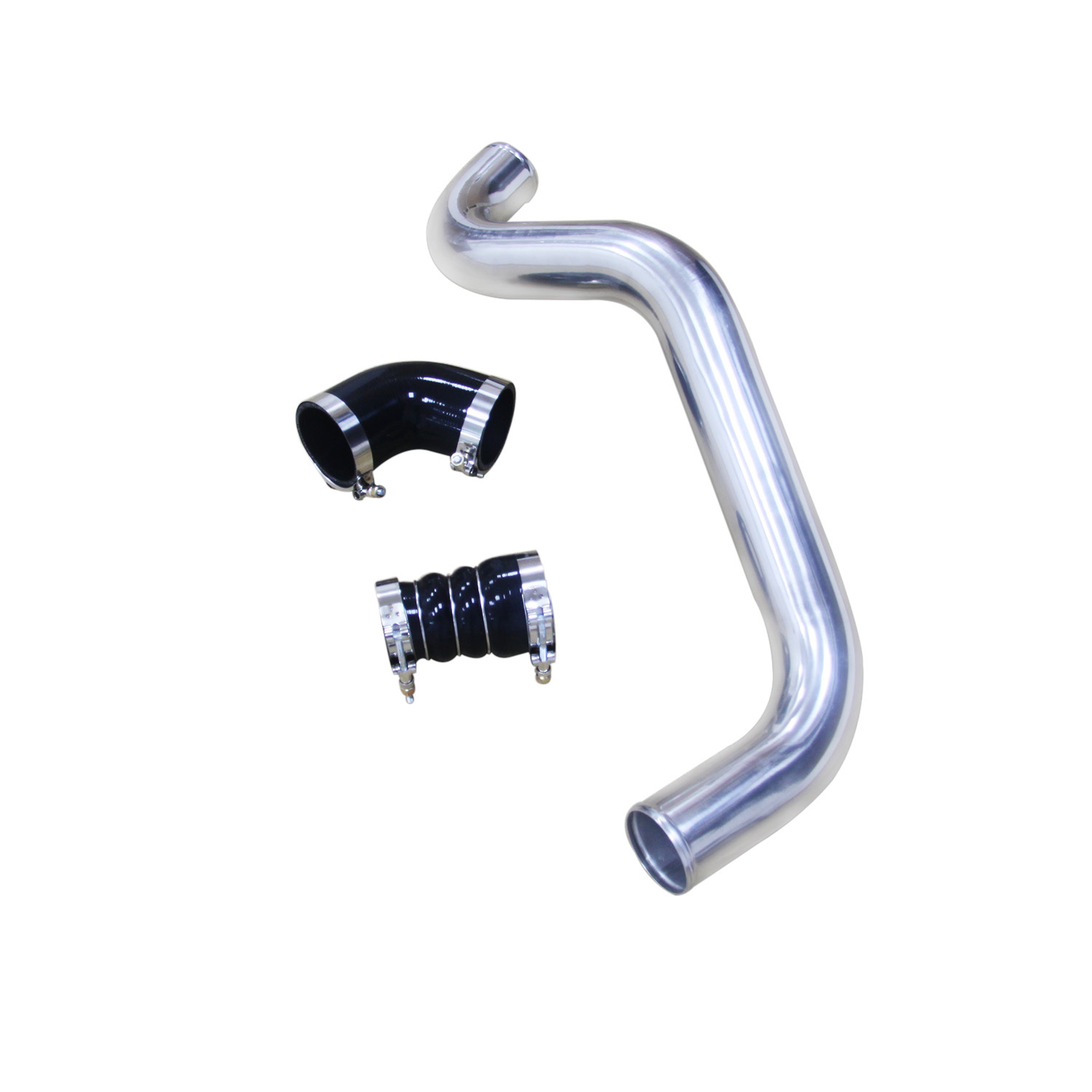
When procurement teams and distributors evaluate the true cost of sourcing an intercooler tube at wholesale volumes, the quoted unit price is rarely the final number that lands on an invoice. Logistics variables silently reshape the total landed cost in ways that can make a seemingly competitive supplier quote turn unfavorable by the time goods reach a warehouse. Understanding which logistics factors drive these pricing shifts is essential for anyone managing bulk orders of intercooler tube components across international or domestic supply chains.
The intercooler tube market is highly price-sensitive, particularly when buyers operate on thin margins or compete for fleet, aftermarket, or OEM supply contracts. Every decision point along the logistics chain — from freight mode selection to customs classification — can compress or erode those margins. This article breaks down the key logistics factors that directly affect intercooler tube wholesale pricing so that buyers can make more informed sourcing decisions and build smarter cost models before committing to large-volume orders.
Freight Mode and Carrier Selection
How Transport Mode Shapes Unit Cost
The choice between air freight, sea freight, and road transport has one of the most immediate and measurable impacts on the landed cost of an intercooler tube order. Air freight delivers speed but applies a cost premium that can easily exceed the manufacturing cost savings achieved through bulk ordering. For lightweight and compact intercooler tube stock, air freight may seem viable for smaller urgent fills, but at wholesale volumes, the volumetric weight calculations can make this mode prohibitively expensive.
Sea freight, by contrast, offers the best cost-per-unit ratio for high-volume intercooler tube orders, especially full container load shipments. The challenge lies in lead time management — ocean transits can span several weeks, which demands accurate demand forecasting and buffer inventory planning. A miscalculation in demand can result in costly expedited replenishment orders that negate the savings from sea freight unit economics.
Road freight is the dominant mode for regional distribution within continents and plays a critical role in the 'last mile' portion of any intercooler tube delivery chain. While often overlooked in initial cost modeling, trucking charges, fuel surcharges, and delivery zone differentials can add meaningful incremental costs to each unit, especially in remote or low-density markets.
Carrier Rate Volatility and Surcharges
Freight rates are not static. Carrier surcharges — including bunker adjustment factors, peak season premiums, and port congestion fees — fluctuate constantly and directly affect the total cost of moving intercooler tube inventory. Buyers who lock in procurement budgets based on spot rates without accounting for surcharge variability often find themselves absorbing unplanned costs at the time of shipment.
Long-term freight contracts with carriers can reduce this volatility, but they require volume commitments that smaller distributors may not be able to sustain. Understanding the surcharge structure applied by the preferred carrier for intercooler tube shipments is a basic due-diligence step that many buyers skip during initial supplier negotiations.
Packaging, Dimensional Weight, and Product Density
Physical Characteristics of Intercooler Tube Products
The intercooler tube is an elongated, irregularly shaped component — typically made from aluminum, silicone, or reinforced rubber — that presents real packaging challenges in bulk shipments. Standard rectangular carton packaging often results in significant unused air space inside each box, which drives up dimensional weight charges applied by carriers. Carriers calculate freight cost based on whichever is greater: actual weight or volumetric weight, and for intercooler tube products, dimensional weight frequently dominates the billing calculation.
Suppliers who invest in custom-fit packaging or efficient nesting arrangements can dramatically reduce the volumetric footprint of an intercooler tube consignment. Buyers should explicitly ask suppliers about their packaging efficiency and request dimensional weight data per carton before finalizing purchase quantities. A well-optimized packing solution can reduce freight cost per unit by a meaningful percentage across a large order.
Protective Packaging Requirements and Cost Trade-offs
The intercooler tube must arrive intact and within specification. Inadequate packaging leads to transit damage, warranty claims, and returns — all of which carry hidden logistics costs that inflate the effective per-unit price. Foam inserts, end caps, moisture barriers, and reinforced outer cartons add material cost at the packing stage, but they protect the intercooler tube from the mechanical stress and humidity exposure common in container shipping environments.
Buyers negotiating wholesale pricing should factor in whether the quoted price includes protective packaging materials or whether these are billed as a separate line item. Suppliers who absorb quality packaging costs into their unit price are often offering better total-cost value than those who appear cheaper on the surface but exclude protective materials.
Customs Duties, Tariffs, and Classification Risk
HS Code Classification and Duty Rate Impact
Every intercooler tube shipment crossing an international border must be classified under the correct Harmonized System code. The applicable duty rate varies significantly depending on whether the product is classified as a raw automotive part, a specific engine component, or a related assembly. An incorrect HS code — whether intentional or due to inexperience — can trigger reclassification upon customs inspection, resulting in higher duty assessments, fines, and shipment delays that all add cost to the intercooler tube order.
Buyers should work with customs brokers who have direct experience handling automotive components to ensure that intercooler tube consignments are correctly declared. The duty rate difference between misclassified and correctly classified automotive parts can range from a few percentage points to over ten percent of the customs value, which at wholesale quantities translates into substantial dollar impact per shipment.
Trade Agreement Eligibility and Certificate of Origin
Many trade corridors offer preferential duty rates under bilateral or regional free trade agreements, but these benefits only apply when the intercooler tube shipment meets origin rules and is accompanied by valid documentation such as a Certificate of Origin. Buyers who fail to request and process this documentation correctly miss out on duty savings that could represent a meaningful reduction in wholesale landed cost.
The administrative process of qualifying for preferential treatment under trade agreements adds a layer of logistics coordination complexity. Suppliers need to certify origin content, and importers need to submit the correct declarations at entry. When this process works smoothly, the intercooler tube buyer captures a real cost advantage that competitors who skip the compliance process do not access.
Lead Time, Inventory Holding, and Order Frequency
The Hidden Cost of Long Lead Times
Lead time is a logistics factor that indirectly but significantly affects the effective price of an intercooler tube in wholesale procurement. When lead times are long — as is common with ocean freight from distant manufacturing regions — buyers must carry higher safety stock levels to avoid stockouts. Holding additional intercooler tube inventory ties up working capital, increases warehouse space requirements, and exposes the buyer to demand forecast error and potential obsolescence risk.
These inventory carrying costs are real expenses that should be included in any total cost of ownership analysis for intercooler tube sourcing. A supplier offering a slightly higher unit price but with shorter, more reliable lead times may generate a lower total cost over a full procurement cycle once holding costs are properly accounted for.
Order Frequency and Minimum Order Quantity Trade-offs
Wholesale pricing for an intercooler tube typically benefits from higher order quantities through unit price breaks. However, increasing order quantity to achieve price breaks also increases the average inventory level carried and extends the risk exposure period. Buyers must balance the per-unit price advantage of larger orders against the logistics costs and capital costs of holding a larger intercooler tube inventory position.
Order frequency decisions also affect freight economics. Consolidating multiple intercooler tube SKUs into a single large shipment reduces per-unit freight cost but requires coordination across product lines and may extend the replenishment cycle for faster-moving items. Building a systematic review of order frequency into the procurement process helps buyers optimize the intercooler tube cost structure over time.
Warehousing, Distribution Network, and Final Delivery
Warehouse Location and Handling Costs
Where an intercooler tube order is received, stored, and redistributed shapes both direct and indirect logistics costs. A centralized warehouse may offer economies of scale in handling and storage but extends the delivery reach to end customers, increasing outbound freight per order. Regional distribution centers reduce outbound shipping distances but multiply fixed warehouse overhead costs that must be spread across the intercooler tube volume flowing through each location.
Handling rates at third-party logistics facilities vary depending on the nature of the product. The intercooler tube, as an awkwardly shaped automotive part, may attract higher pick-and-pack rates than uniform, easily stacked products. Buyers using third-party warehousing should confirm handling rates specifically for their intercooler tube SKUs rather than assuming standard rates apply.
Last-Mile Delivery and Returns Logistics
For distributors servicing workshops, dealerships, or fleet operators, last-mile delivery performance directly affects customer satisfaction and repeat ordering behavior. However, last-mile delivery also carries per-order cost implications that affect the economics of the intercooler tube distribution model. Small, frequent deliveries to dispersed customers are expensive on a per-unit basis, and these costs must be recovered through the intercooler tube pricing structure or absorbed as a service cost.
Returns logistics — the reverse flow of defective, incorrectly ordered, or surplus intercooler tube units — adds another logistics cost layer. A clear and cost-efficient returns process reduces the per-unit cost impact of returns, but poor returns management amplifies both direct costs and the indirect costs of disputed invoices and credit processing delays. Building returns logistics expectations into supplier agreements from the outset helps control these costs at scale.
FAQ
Why does freight mode selection matter so much for intercooler tube wholesale pricing?
Freight mode directly determines how much is spent moving the intercooler tube from origin to destination. Air freight is fast but expensive per unit, while sea freight offers the lowest cost per unit at high volumes. The choice of mode affects not just direct freight cost but also lead time, which in turn drives inventory holding costs. Selecting the right freight mode for the right order profile is one of the highest-leverage logistics decisions in intercooler tube wholesale procurement.
How do packaging decisions affect the landed cost of an intercooler tube order?
Carriers charge based on dimensional weight when the volumetric footprint of a shipment exceeds its actual weight threshold. The intercooler tube's elongated shape creates packaging inefficiency if not carefully managed. Poor packaging wastes freight capacity and inflates costs, while smart custom-fit packaging reduces volumetric charges significantly. Protective packaging also prevents transit damage, which would otherwise generate replacement and return costs that further inflate the effective unit price.
What role do customs duties play in the total wholesale price of an intercooler tube?
Customs duties can add a meaningful percentage to the import cost of an intercooler tube shipment. The applicable duty rate depends on the HS classification and the trade relationship between origin and destination countries. Incorrect classification risks reclassification and penalties, while failing to use available trade agreement preferences results in paying higher duties than necessary. Both scenarios increase the effective intercooler tube wholesale cost and can undermine sourcing decisions made solely on the basis of supplier unit price.
How does lead time affect intercooler tube wholesale cost modeling?
Lead time determines how much safety stock must be held to ensure uninterrupted supply. Longer lead times require higher buffer inventory, which increases capital tied up in stock and raises warehousing costs. For the intercooler tube buyer, this means that a supplier with longer lead times should be evaluated on a total landed cost basis that includes inventory carrying costs, not just on unit price alone. A supplier offering shorter lead times may deliver a lower total cost despite a higher sticker price per unit.
Table of Contents
- Freight Mode and Carrier Selection
- Packaging, Dimensional Weight, and Product Density
- Customs Duties, Tariffs, and Classification Risk
- Lead Time, Inventory Holding, and Order Frequency
- Warehousing, Distribution Network, and Final Delivery
-
FAQ
- Why does freight mode selection matter so much for intercooler tube wholesale pricing?
- How do packaging decisions affect the landed cost of an intercooler tube order?
- What role do customs duties play in the total wholesale price of an intercooler tube?
- How does lead time affect intercooler tube wholesale cost modeling?