
 EN
EN
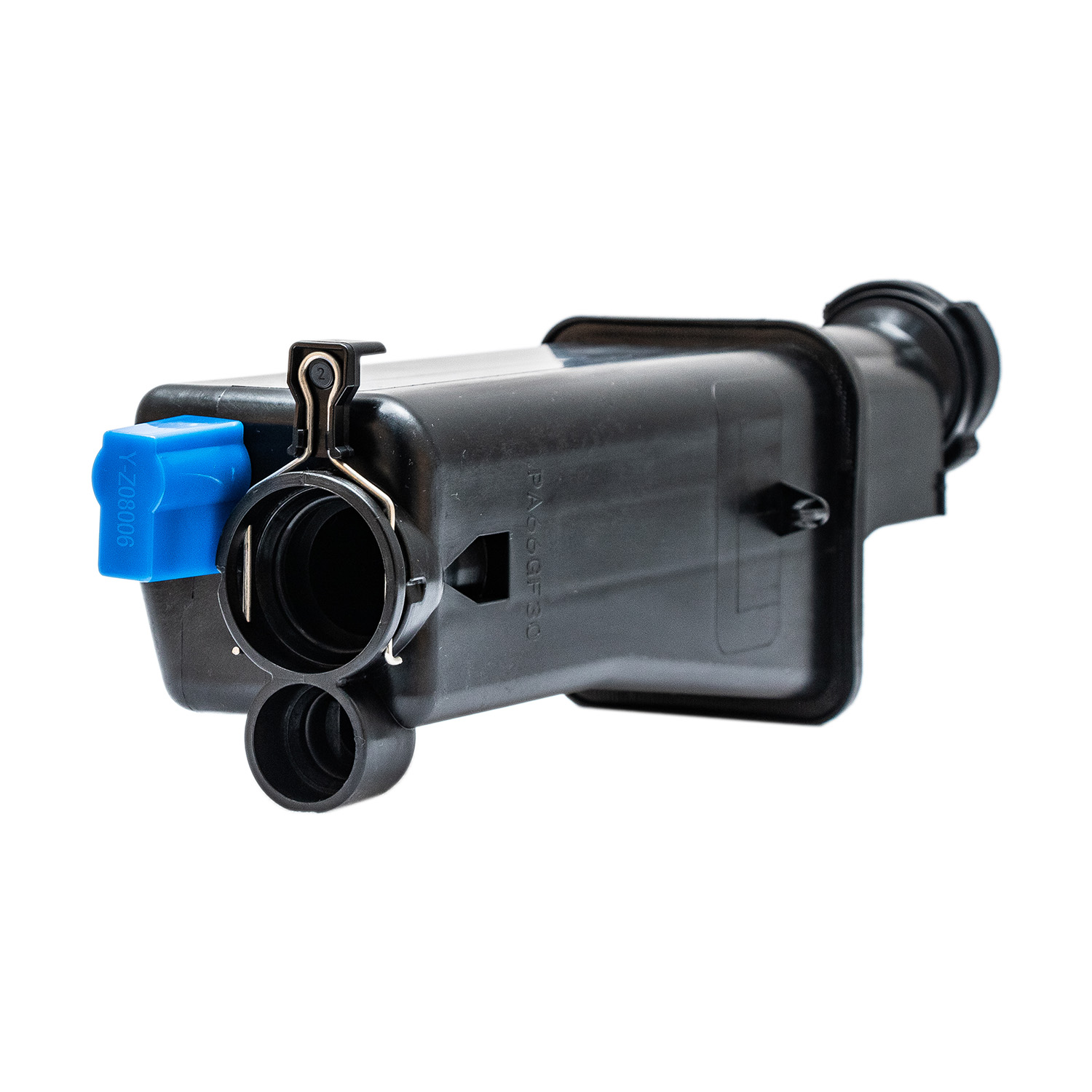
When sourcing in bulk, the material composition of an overflow tank is one of the most consequential decisions a procurement team can make. Unlike single-unit purchases where individual performance is easy to evaluate, bulk sourcing amplifies both the benefits and the risks of any material choice. A durable overflow tank keeps coolant systems operating safely under thermal stress, pressure cycles, and chemical exposure — and the material is what determines how long it can do that reliably.
For B2B buyers managing large fleet contracts, automotive aftermarket supply chains, or industrial vehicle maintenance programs, understanding the material science behind an overflow tank is not optional — it is strategic. The wrong material selected at volume leads to premature failure, warranty claims, increased replacement cycles, and downstream reputational risk. This article examines which materials matter most, how they perform under real-world conditions, and what procurement teams should evaluate before committing to a large-scale order.
Why Material Selection Defines Overflow Tank Lifespan
The Relationship Between Material Properties and Thermal Fatigue
Every overflow tank operates within a cycle of heat absorption and dissipation. Coolant enters the tank at elevated temperatures, expands, and then contracts as the engine cools. Over thousands of operating cycles, this thermal fatigue places continuous mechanical stress on the tank walls, fittings, and seams. A material that cannot absorb and recover from this stress will eventually crack, warp, or develop micro-fractures that compromise the entire coolant system.
The thermal expansion coefficient of the chosen material directly affects how well the overflow tank maintains its dimensional integrity across temperature ranges. Materials with high expansion coefficients may seal poorly at cold temperatures and over-expand at peak heat, while materials with low, stable coefficients tend to maintain consistent performance throughout the thermal cycle. This is a primary reason why material selection is not cosmetic — it is structural.
When sourcing overflow tanks at volume, thermal fatigue behavior should be tested or verified through supplier documentation. Batch-level consistency matters as much as the intrinsic material properties, because even a theoretically superior material can underperform if manufacturing quality introduces structural weaknesses or thickness variations across units.
Chemical Resistance as a Durability Factor
Coolant fluids — whether ethylene glycol-based, OAT, or HOAT formulations — are chemically active. Over time, coolant degrades and becomes more acidic, and that acidic environment can attack the internal surfaces of an overflow tank through slow oxidation, swelling, or embrittlement. The overflow tank must resist these chemical processes consistently across the full service interval.
Materials that are chemically incompatible with common coolant formulations will show early degradation signs: discoloration, softening, layer delamination, or structural brittleness. At the bulk sourcing level, this can mean hundreds of units failing ahead of schedule — a procurement outcome that is costly and difficult to manage once units are deployed across a fleet or resale channel.
Verifying chemical resistance involves looking at material datasheets, asking suppliers about exposure testing protocols, and in some cases requesting sample units for controlled laboratory immersion testing before committing to a purchase order. This investment in pre-procurement evaluation is especially worthwhile when dealing with a new supplier or a new overflow tank design.
Plastic-Based Overflow Tanks: Durability Trade-Offs in Bulk Contexts
High-Density Polyethylene and Polypropylene
Plastic overflow tanks manufactured from high-density polyethylene (HDPE) or polypropylene (PP) are common across light vehicle and passenger car applications. These polymers offer good chemical resistance to most standard coolant formulations, are relatively lightweight, and can be produced at low cost through blow molding or injection molding processes. For high-volume procurement, the unit economics are attractive.
However, plastic overflow tank units made from these materials are susceptible to UV degradation when exposed to engine bay heat combined with underhood radiation over extended service periods. Polypropylene in particular can become brittle after prolonged exposure to elevated temperatures, especially in vehicles operating in hot climates or under heavy tow loads. Buyers sourcing overflow tanks for fleet use in demanding environments should assess whether the plastic grade used has UV stabilizers and heat-resistant additives incorporated at the compounding stage.
At the bulk level, plastic overflow tank durability is also sensitive to wall thickness consistency. Mold wear in high-volume production can lead to thinning in certain areas, which creates localized stress concentration points. Requesting minimum wall thickness specifications from suppliers and conducting random sampling inspection on received batches helps catch this issue before field deployment.
Nylon and Glass-Filled Polymer Variants
Nylon-based compounds and glass-fiber-reinforced polymers represent a step up in mechanical performance for an overflow tank intended for heavier-duty applications. Glass-filled nylon offers higher tensile strength, improved resistance to creep under sustained pressure, and better dimensional stability at elevated temperatures compared to standard polypropylene.
These materials are common in overflow tank designs for commercial vehicles, light trucks, and performance applications where the coolant system operates under higher sustained pressures. The trade-off is cost — glass-filled engineering polymers are more expensive to source and require tighter processing controls, meaning the price per unit is higher in bulk orders but the failure rate is typically lower over the product lifecycle.
For B2B buyers, the relevant calculation is not just unit price but total cost of ownership. A nylon-composite overflow tank that costs 20 to 30 percent more per unit but lasts twice as long across a fleet application may generate net savings when factoring in reduced replacement labor, reduced parts inventory, and lower warranty exposure.
Aluminum Overflow Tanks: Performance Profile and Bulk Sourcing Considerations
Thermal Conductivity and Structural Stability
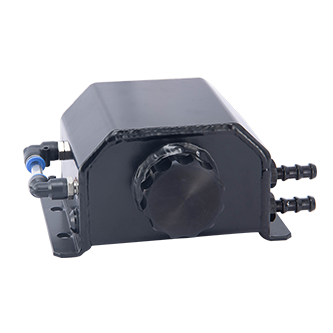
Aluminum is widely regarded as one of the most durable materials for an overflow tank in performance, off-road, and commercial vehicle applications. Its thermal conductivity is significantly higher than any polymer option, which means heat is distributed and dissipated more efficiently across the tank body. This property reduces localized hot spots and the structural stress they create, contributing directly to longer service life.
An aluminum overflow tank also maintains excellent dimensional stability under pressure. Unlike plastics that can deform under sustained thermal load, aluminum retains its shape across wide temperature cycles. This is particularly important in applications where the coolant system operates at elevated pressure caps, such as turbocharged diesel engines or high-performance gasoline engines where underhood temperatures are consistently high.
From a structural standpoint, aluminum overflow tanks resist impact damage better than comparable polymer units in many real-world scenarios, including off-road use where engine bay components may be subject to debris impact or flex during articulation. The combination of thermal, mechanical, and dimensional performance makes aluminum an attractive material choice when durability is the priority in bulk sourcing.
Corrosion Risk and Surface Treatment Requirements
Aluminum is not without vulnerabilities. In coolant environments, particularly where coolant pH has drifted into acidic range or where dissimilar metals create galvanic coupling opportunities, aluminum can corrode. Pitting corrosion and crevice corrosion are the primary failure modes that affect an aluminum overflow tank over extended service periods if the material is not properly protected.
Reputable manufacturers address this through internal anodizing, protective coatings, or the use of aluminum alloys with enhanced corrosion resistance such as 6061 or 3003 series. When evaluating an aluminum overflow tank at the bulk sourcing stage, buyers should ask specifically what surface treatment or alloy grade is used, and what coolant compatibility the manufacturer has validated.
External corrosion protection is equally relevant for vehicles operating in high-humidity, coastal, or road-salt environments. Powder coating or anodized exterior finishes extend the surface life of an aluminum overflow tank considerably. These finishing specifications should be confirmed in supplier agreements before bulk orders are placed to ensure consistency across the production run.
Stainless Steel and Hybrid Material Configurations
Stainless Steel for Extreme Durability Requirements
In applications where the most extreme durability is required — heavy commercial vehicles, industrial equipment, or specialty motorsport applications — stainless steel overflow tank configurations offer maximum resistance to both mechanical stress and chemical degradation. Stainless steel is essentially immune to the corrosion risks that affect aluminum in acidic coolant environments, and its fatigue resistance under pressure cycling is superior to all polymer options.
The drawback is cost and weight. Stainless steel overflow tank units are significantly heavier than aluminum or polymer alternatives, and the manufacturing cost is higher due to the machining and welding precision required. For most light vehicle and passenger car applications, stainless steel is overspecified — its performance advantages exceed what the operating environment demands. But for procurement teams sourcing overflow tanks for industrial or commercial heavy-duty fleets, the cost premium may be justified by the reduction in scheduled maintenance and replacement costs.
When evaluating stainless steel overflow tank options at volume, buyers should clarify the grade used — 304 and 316 stainless steel behave differently in coolant environments, with 316 offering superior resistance to chloride-induced pitting. Specifying the alloy grade in the purchase contract protects against substitution during production scaling.
Hybrid Designs Combining Material Strengths
Some modern overflow tank designs use hybrid material configurations — for example, an aluminum body with polymer fittings, or a reinforced polymer tank with metal mounting brackets and neck collars. These hybrid designs attempt to capture the weight and cost advantages of polymer where structural demands are lower, while using metal components in the areas subject to greatest mechanical and thermal stress.
Hybrid overflow tank configurations can offer excellent durability-to-cost ratios in bulk sourcing, but they introduce additional evaluation complexity. The durability of a hybrid unit is only as strong as the weakest material junction — typically where polymer meets metal at a threaded fitting or press-fit collar. Buyers should ask suppliers specifically how these junctions are sealed and how they perform under thermal cycling and vibration fatigue.
In bulk procurement, hybrid overflow tank units require careful inspection sampling to ensure that bonding, sealing, and fitting integrity are consistent across the production batch. A hybrid design from a manufacturer with rigorous process controls can outperform a single-material design from a manufacturer with inconsistent quality practices.
How to Evaluate Material Durability When Sourcing Overflow Tanks at Volume
Documentation, Standards, and Supplier Verification
Responsible bulk sourcing of an overflow tank starts with documentation. Material datasheets, pressure test certifications, thermal cycling test reports, and chemical compatibility statements should be part of the supplier qualification package. These documents allow procurement teams to evaluate material performance claims against independently verifiable data rather than marketing language.
Industry standards relevant to overflow tank performance include pressure burst testing, vacuum collapse testing, and vibration endurance testing. Suppliers who reference specific test protocols and can provide actual test results — rather than just claiming compliance — offer more confidence in bulk sourcing decisions. Asking for batch-level test certificates rather than one-time prototype results is equally important when evaluating consistency across production volumes.
Third-party inspection or factory audits add another layer of assurance when sourcing overflow tanks at significant scale. The investment in a pre-shipment inspection or a factory quality audit is modest relative to the cost of receiving a large batch of units with material or manufacturing defects that only manifest after deployment in the field.
Matching Material to Application Environment
No single overflow tank material is universally optimal — the right choice depends on the operating environment of the end application. Procurement teams should begin by profiling the conditions their overflow tank units will face: peak operating temperature, pressure cap rating, coolant formulation type, vibration exposure, climate conditions, and expected service intervals.
A standard HDPE overflow tank may be entirely suitable for a light passenger vehicle fleet operating in temperate climates with regular coolant maintenance. The same unit would be a poor choice for a heavy-duty diesel truck fleet operating in extreme temperatures with extended service intervals. Matching the material specification to the application environment is the foundational step in selecting a durable overflow tank for bulk sourcing.
When the application profile is not clearly defined — as is common in aftermarket distribution contexts where the same overflow tank may serve multiple vehicle platforms — procurement teams should lean toward higher-performance materials and surface treatments to ensure the unit performs adequately across the widest possible operating range. The cost of over-specifying is usually much lower than the cost of widespread field failure across a diverse vehicle population.
FAQ
What is the most durable material for an overflow tank used in heavy-duty applications?
For heavy-duty applications, aluminum and stainless steel overflow tank designs generally offer the highest durability. Aluminum provides excellent thermal performance, structural stability, and a good weight-to-strength ratio. Stainless steel offers superior corrosion resistance and fatigue life but at greater weight and cost. The optimal choice depends on the specific operating environment, pressure requirements, and maintenance schedule of the application.
How does coolant chemistry affect overflow tank material choice in bulk sourcing?
Coolant formulations vary in pH, additive chemistry, and corrosion inhibitor types. Acidic coolant environments can accelerate polymer degradation and aluminum corrosion, while certain OAT coolants may be incompatible with specific rubber seals used in hybrid overflow tank assemblies. Buyers sourcing at volume should confirm that the overflow tank material is validated for compatibility with the coolant formulations used in the target application fleet to avoid accelerated degradation.
Can bulk-sourced plastic overflow tanks match the durability of aluminum units?
In many standard passenger vehicle applications, high-quality glass-filled nylon or stabilized polypropylene overflow tank units can deliver competitive durability relative to aluminum, particularly when operating conditions do not include extreme sustained heat or high pressure. The key factors are material grade, wall thickness consistency, and manufacturing quality control. For demanding environments, aluminum typically maintains a durability advantage, especially over longer service intervals and under repeated thermal cycling stress.
What quality checks should be performed when receiving a bulk shipment of overflow tanks?
A robust receiving inspection for bulk overflow tank shipments should include dimensional verification against specifications, visual inspection for surface defects, wall thickness sampling, pressure test verification on a statistical sample, and fitting torque checks for any threaded or press-fit components. For aluminum overflow tank units, checking surface treatment uniformity and weld integrity is particularly important. Documenting these checks against supplier-provided batch certifications creates an auditable quality record that supports warranty management and supplier accountability.
Table of Contents
- Why Material Selection Defines Overflow Tank Lifespan
- Plastic-Based Overflow Tanks: Durability Trade-Offs in Bulk Contexts
- Aluminum Overflow Tanks: Performance Profile and Bulk Sourcing Considerations
- Stainless Steel and Hybrid Material Configurations
- How to Evaluate Material Durability When Sourcing Overflow Tanks at Volume
-
FAQ
- What is the most durable material for an overflow tank used in heavy-duty applications?
- How does coolant chemistry affect overflow tank material choice in bulk sourcing?
- Can bulk-sourced plastic overflow tanks match the durability of aluminum units?
- What quality checks should be performed when receiving a bulk shipment of overflow tanks?