
 EN
EN
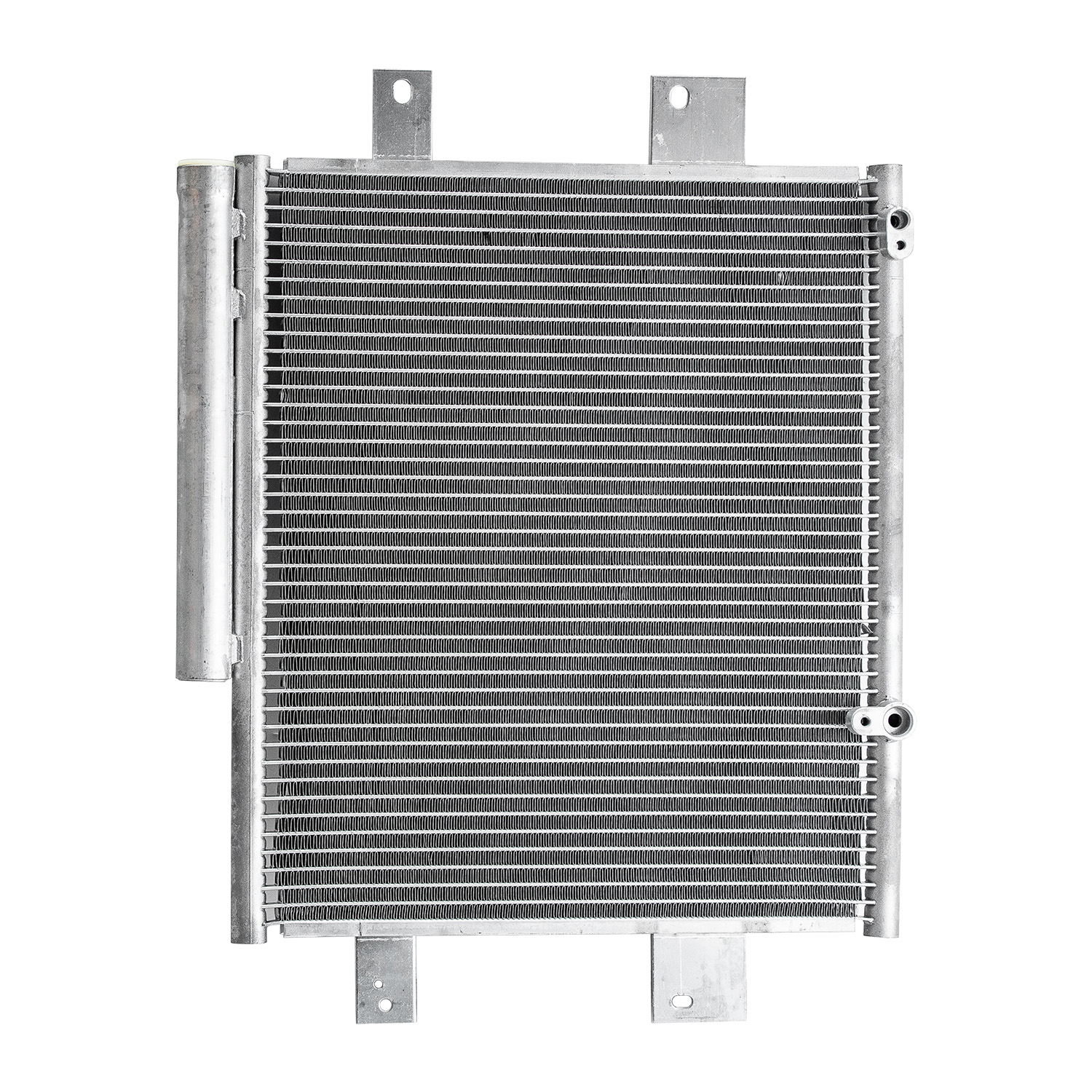
The choice of material grades in aluminium intercooler manufacturing directly impacts performance, durability, and cost-effectiveness. Unlike generic heat exchangers, automotive intercoolers must withstand extreme temperature variations, pressure cycles, and corrosive environments while maintaining optimal heat transfer efficiency. Understanding which specific aluminium grades deliver the best balance of thermal conductivity, mechanical strength, and manufacturing workability is crucial for engineers and manufacturers seeking to optimize their intercooler designs.
Material selection in aluminium intercooler manufacturing involves complex trade-offs between thermal performance, structural integrity, and production efficiency. Different applications demand different material characteristics, from lightweight racing applications requiring maximum heat dissipation to heavy-duty commercial vehicles needing exceptional durability. The following analysis examines the critical aluminium grades and their specific properties that determine intercooler performance across various automotive applications.
Primary Aluminium Grades for Core Construction
3003 Aluminium Alloy Applications
The 3003 aluminium grade represents the most widely used material in aluminium intercooler manufacturing for core construction. This alloy contains approximately 1.2% manganese, which significantly enhances its corrosion resistance compared to pure aluminium while maintaining excellent formability. The thermal conductivity of 3003 aluminium reaches 159 W/mK, providing sufficient heat transfer capabilities for most automotive intercooler applications without compromising structural integrity.
Manufacturing processes benefit from 3003's exceptional workability characteristics. The alloy readily accepts brazing operations, which are essential in aluminium intercooler manufacturing for creating leak-proof joints between fins and tubes. Its moderate strength properties, with a tensile strength of 110-145 MPa in the annealed condition, provide adequate resistance to pressure cycling while allowing for efficient forming operations during tube and fin production.
The corrosion resistance of 3003 aluminium makes it particularly suitable for intercoolers exposed to moisture and road salt conditions. Unlike higher-strength alloys that may suffer from stress corrosion cracking, 3003 maintains its structural integrity throughout extended service life. This durability factor becomes critical in aluminium intercooler manufacturing where long-term reliability outweighs marginal performance gains from more exotic alloys.
1100 Aluminium for Specialized Applications
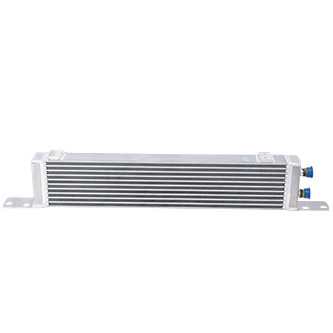
Pure aluminium grade 1100 offers the highest thermal conductivity among commonly used alloys in aluminium intercooler manufacturing, reaching 222 W/mK. This superior heat transfer capability makes 1100 aluminium the preferred choice for high-performance intercoolers where maximum cooling efficiency is paramount. The alloy's 99% minimum aluminium content ensures minimal thermal resistance, enabling optimal heat dissipation in racing and performance applications.
However, the selection of 1100 aluminium requires careful consideration of mechanical limitations. With a tensile strength of only 90-165 MPa, this grade demands robust design approaches to handle operating pressures and thermal stresses. In aluminium intercooler manufacturing, 1100 is typically reserved for fin applications where thermal performance takes priority over structural demands, often combined with stronger alloys for pressure-bearing components.
The excellent formability of 1100 aluminium facilitates complex fin geometries that maximize heat transfer surface area. Its soft nature allows for tight fin spacing and intricate folding patterns that would be challenging with harder alloys. This manufacturing advantage enables designers to optimize thermal performance through sophisticated fin architectures while maintaining cost-effective production methods.
Structural Components and Tank Materials
5052 Aluminium for Tank Construction
Tank construction in aluminium intercooler manufacturing typically employs 5052 aluminium alloy due to its superior strength characteristics and excellent corrosion resistance. This magnesium-containing alloy provides tensile strengths ranging from 193-228 MPa in the H32 temper, significantly exceeding the structural requirements for intercooler end tanks while maintaining adequate thermal conductivity of 138 W/mK.
The 5052 grade excels in fatigue resistance, a critical property for intercooler tanks subjected to repeated pressure and temperature cycling. Its ability to withstand stress concentrations around inlet and outlet connections makes it ideal for complex tank geometries. In aluminium intercooler manufacturing, this alloy enables thinner wall sections without compromising durability, contributing to overall weight reduction and improved heat dissipation efficiency.
Marine-grade corrosion resistance of 5052 aluminium ensures long-term performance in harsh automotive environments. The alloy's resistance to saltwater corrosion and atmospheric exposure surpasses that of many other structural grades, making it particularly valuable for intercoolers in coastal regions or winter climates where road salt exposure is common.
6061 Aluminium for High-Pressure Applications
When intercooler designs require exceptional structural strength, 6061 aluminium becomes the material of choice in aluminium intercooler manufacturing. This heat-treatable alloy achieves tensile strengths up to 310 MPa in the T6 condition, enabling lighter-weight constructions capable of handling extreme boost pressures in high-performance turbocharger applications.
The balanced composition of 6061, containing both magnesium and silicon, provides excellent weldability alongside superior mechanical properties. This characteristic proves invaluable in aluminium intercooler manufacturing where welded connections must maintain pressure integrity throughout the intercooler's service life. The alloy's thermal conductivity of 167 W/mK, while lower than pure grades, remains sufficient for structural applications where heat transfer occurs primarily through direct contact rather than conduction through thick sections.
Machining characteristics of 6061 aluminium facilitate precision manufacturing of connection fittings and mounting brackets. The alloy's stable dimensional properties under thermal cycling ensure that precision-machined features maintain their tolerances throughout extended service periods, contributing to overall intercooler reliability and performance consistency.
Fin Materials and Heat Transfer Optimization
Ultra-Thin Fin Applications
Advanced aluminium intercooler manufacturing employs specialized thin-gauge materials for fin construction to maximize heat transfer surface area while minimizing air-side pressure drop. Grades like 3003 and 1100 in thicknesses ranging from 0.05mm to 0.15mm create optimal fin density configurations that balance thermal performance with manufacturing feasibility.
The formability requirements for ultra-thin fins demand careful material selection based on forming limit diagrams and strain distribution analysis. In aluminium intercooler manufacturing, the ability to achieve consistent fin spacing and maintain dimensional stability during brazing operations depends heavily on the material's mechanical properties in thin sections. Proper grade selection ensures that fin integrity is maintained throughout the manufacturing process while optimizing heat transfer efficiency.
Surface treatments and fin coatings interact differently with various aluminium grades, affecting both heat transfer and corrosion resistance. The selection of base material in aluminium intercooler manufacturing must consider compatibility with protective coatings and their impact on thermal performance. Advanced surface modifications can enhance heat transfer coefficients by 15-25% when properly matched to the underlying aluminium grade.
Louvered Fin Geometries
Complex louvered fin patterns require specific material properties to maintain dimensional accuracy during forming operations. The spring-back characteristics of different aluminium grades directly affect the final geometry of heat transfer surfaces, making material selection critical for achieving designed thermal performance. In aluminium intercooler manufacturing, the consistency of fin angles and spacing determines both heat transfer efficiency and air-side pressure drop characteristics.
Work hardening behavior during fin forming operations varies significantly between aluminium grades, affecting the structural integrity of completed fin assemblies. Materials that exhibit excessive work hardening may become brittle and prone to cracking, while grades with insufficient strain hardening may lack the spring-back control necessary for precise fin geometries. The optimal selection balances formability with final mechanical properties to ensure long-term durability in service.
Thermal expansion matching between fin materials and tube materials becomes critical in aluminium intercooler manufacturing to prevent stress concentration and potential failure at brazed joints. Different aluminium grades exhibit varying thermal expansion coefficients, and mismatched materials can create differential stresses that compromise joint integrity under thermal cycling conditions.
Manufacturing Process Considerations
Brazing Compatibility and Joint Integrity
The success of aluminium intercooler manufacturing depends heavily on the brazing compatibility of selected materials. Different aluminium grades respond differently to brazing temperatures and atmospheres, affecting joint strength and corrosion resistance. The formation of brittle intermetallic compounds at brazed joints can occur when incompatible grades are combined, leading to premature failure under thermal cycling conditions.
Clad aluminium materials provide enhanced brazing performance in aluminium intercooler manufacturing by incorporating sacrificial alloy layers that facilitate joint formation. These specialized materials, such as 3003 core with 4343 cladding, ensure consistent brazing results while maintaining the mechanical properties of the base material. The cladding layer melts at brazing temperature to form the joint, while the core material provides structural integrity.
Post-brazing mechanical properties depend on the thermal treatment experienced during manufacturing. Heat-treatable alloys may lose strength during brazing operations, while non-heat-treatable grades typically retain their properties. This consideration influences material selection in aluminium intercooler manufacturing, particularly for applications where post-brazing strength is critical for performance and durability.
Forming and Assembly Operations
The forming characteristics of different aluminium grades directly impact manufacturing efficiency and tooling costs in aluminium intercooler manufacturing. Materials with poor formability require more complex tooling and multiple forming stages, increasing production costs and potential quality issues. The selection of grades with optimal forming properties enables cost-effective manufacturing while maintaining design flexibility for performance optimization.
Spring-back control during tube forming operations requires careful material selection based on yield strength and work hardening characteristics. Consistent tube dimensions are essential for proper heat exchanger assembly and thermal performance. In aluminium intercooler manufacturing, materials that exhibit predictable spring-back behavior enable accurate tooling design and dimensional control throughout production runs.
Assembly tolerances and fit-up requirements influence material selection for components that must maintain precise dimensional relationships. The thermal expansion behavior of different aluminium grades can affect assembly clearances and stress distributions during operation. Proper material selection ensures that thermal growth differentials remain within acceptable limits to prevent binding or stress concentration at critical interfaces.
FAQ
Which aluminium grade provides the best thermal conductivity for intercooler cores?
Grade 1100 aluminium offers the highest thermal conductivity at 222 W/mK among commonly used alloys in aluminium intercooler manufacturing. However, 3003 aluminium with 159 W/mK provides the best balance of thermal performance and structural strength for most applications, making it the preferred choice for core construction where durability and heat transfer must be optimized together.
Can different aluminium grades be mixed in a single intercooler design?
Yes, combining different aluminium grades is common in aluminium intercooler manufacturing. Typical configurations use 1100 or 3003 for fins where thermal performance is critical, 3003 or 5052 for tubes requiring moderate strength, and 5052 or 6061 for tanks demanding high structural integrity. The key is ensuring brazing compatibility and thermal expansion matching between adjacent components.
How does material grade selection affect intercooler manufacturing costs?
Material costs generally increase with alloy complexity and strength requirements. Grade 1100 is typically the least expensive, followed by 3003, 5052, and 6061. However, the total manufacturing cost in aluminium intercooler manufacturing depends on forming characteristics, brazing requirements, and yield rates. Sometimes higher-grade materials reduce overall costs by enabling thinner sections or simpler manufacturing processes.
What material considerations are important for high-boost turbocharger applications?
High-boost applications in aluminium intercooler manufacturing require materials capable of handling elevated pressures and temperatures. Grade 6061 aluminum in T6 condition is typically specified for tanks and structural components due to its 310 MPa tensile strength. Core materials can remain 3003 or 1100 since pressure stresses are carried by the tank structure, allowing thermal optimization without compromising safety margins.
Table of Contents
- Primary Aluminium Grades for Core Construction
- Structural Components and Tank Materials
- Fin Materials and Heat Transfer Optimization
- Manufacturing Process Considerations
-
FAQ
- Which aluminium grade provides the best thermal conductivity for intercooler cores?
- Can different aluminium grades be mixed in a single intercooler design?
- How does material grade selection affect intercooler manufacturing costs?
- What material considerations are important for high-boost turbocharger applications?