
 EN
EN
Service fleet managers constantly evaluate component choices that can reduce maintenance costs, minimize downtime, and improve operational reliability. Among these critical decisions, the selection of wheel hub bearings plays a significant role in determining long-term fleet performance. Sealed hub bearings have emerged as the preferred solution for many commercial and service fleet applications, offering distinct operational advantages over traditional serviceable bearing assemblies.
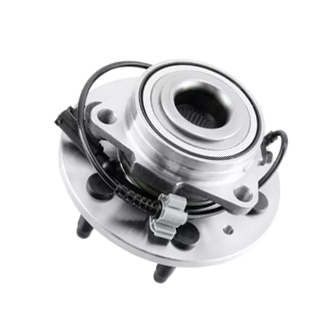
The advantages of sealed hub bearings for service fleets extend beyond simple maintenance considerations, encompassing improved durability, enhanced contamination resistance, and predictable service intervals that enable better fleet planning. Understanding these benefits helps fleet operators make informed decisions about bearing selection and replacement strategies that can significantly impact their bottom line and operational efficiency.
Enhanced Protection Against Environmental Contamination
Superior Seal Design and Water Resistance
Sealed hub bearings incorporate advanced sealing technology that provides exceptional protection against water ingress, a critical advantage for service fleets operating in diverse environmental conditions. The integrated sealing system features multiple barriers that prevent moisture penetration, reducing the risk of premature bearing failure due to corrosion. This protection becomes particularly valuable for fleets that regularly encounter wet conditions, road salt exposure, or high-pressure washing scenarios during vehicle maintenance.
The seal design in modern sealed hub bearings utilizes specialized elastomeric materials that maintain flexibility across wide temperature ranges while providing consistent sealing pressure. This ensures that the protective barrier remains effective throughout the bearing's service life, even under the thermal cycling conditions common in commercial vehicle applications. Fleet operators benefit from reduced bearing replacements related to water damage, which can represent a significant portion of unscheduled maintenance events.
Contamination Exclusion in Harsh Operating Environments
Service fleets frequently operate in environments where dust, dirt, and debris pose constant threats to bearing integrity. Sealed hub bearings provide comprehensive protection against particulate contamination through their closed-system design, preventing abrasive materials from entering the bearing raceway. This contamination resistance translates directly into extended bearing life and reduced maintenance intervals for fleet vehicles.
The contamination exclusion capabilities of sealed hub bearings prove particularly valuable for construction service fleets, utility vehicles, and delivery fleets that regularly navigate unpaved roads or work sites. By maintaining clean lubricant and preventing abrasive wear, these bearings can achieve service intervals that may be two to three times longer than comparable open bearing systems in similar operating conditions.
Significant Maintenance Cost Reduction
Elimination of Regular Greasing Requirements
Traditional serviceable wheel bearings require periodic greasing to maintain proper lubrication, creating recurring maintenance tasks that consume both labor time and material costs. Sealed hub bearings eliminate this requirement entirely through their permanently lubricated design, removing scheduled greasing from fleet maintenance protocols. This advantage translates into substantial labor savings over the vehicle's service life, as technicians can focus on other critical maintenance tasks.
The labor savings associated with sealed hub bearings become more significant as fleet size increases. A medium-sized service fleet might save hundreds of technician hours annually by eliminating bearing greasing requirements, allowing maintenance staff to address other vehicle systems or increase fleet availability. The pre-filled lubrication in sealed hub bearings maintains optimal performance throughout the bearing's designed service life without intervention.
Reduced Unscheduled Maintenance Events
Fleet reliability depends heavily on minimizing unexpected breakdowns that can disrupt service schedules and increase operating costs. Sealed hub bearings contribute to improved reliability by reducing the likelihood of premature bearing failures that often result from inadequate lubrication or contamination in serviceable systems. The consistent performance characteristics of sealed hub bearings enable more predictable maintenance planning.
The reduction in unscheduled maintenance extends beyond the immediate cost savings of avoided repairs. Fleet vehicles that experience fewer unexpected bearing failures maintain better service reliability, improving customer satisfaction and reducing the need for backup vehicles. This reliability advantage becomes particularly important for emergency service fleets, where vehicle availability directly impacts response capabilities.
Improved Operational Efficiency and Fleet Availability
Extended Service Intervals and Predictable Replacement Timing
Sealed hub bearings offer predictable service life characteristics that enable fleet managers to implement condition-based maintenance strategies more effectively. Unlike serviceable bearings that may fail unpredictably due to maintenance variations, sealed hub bearings typically provide consistent performance throughout their design life, allowing for accurate replacement scheduling during planned maintenance windows.
This predictability allows fleet operators to coordinate bearing replacements with other scheduled maintenance activities, such as brake service or tire replacement, maximizing the efficiency of maintenance events. By bundling bearing replacement with other services, fleets can reduce the frequency of vehicle downtime while ensuring that all critical components receive appropriate attention during maintenance intervals.
Simplified Installation and Reduced Technical Skill Requirements
The installation process for sealed hub bearings generally requires less specialized knowledge and fewer precision adjustments compared to serviceable bearing systems. This simplification reduces the potential for installation errors that could lead to premature failure while making the replacement procedure more accessible to a broader range of maintenance technicians.
Fleet maintenance operations benefit from the standardized installation procedures associated with sealed hub bearings, as technicians can develop consistent practices that ensure proper installation across different vehicle models. The reduced complexity also decreases installation time, allowing maintenance teams to process more vehicles during scheduled maintenance periods and improving overall fleet availability.
Long-Term Cost Benefits and ROI Considerations
Total Cost of Ownership Analysis
While sealed hub bearings typically carry a higher initial purchase price compared to serviceable alternatives, the total cost of ownership calculation often favors the sealed design when all factors are considered. The elimination of greasing labor, reduced downtime, and extended service intervals combine to create significant cost savings over the bearing's operational life.
Fleet financial analysis should account for the indirect costs associated with bearing maintenance, including vehicle downtime, technician labor rates, and the opportunity costs of reduced fleet availability. When these factors are included in the cost comparison, sealed hub bearings frequently demonstrate superior economic value, particularly for high-utilization fleet vehicles where minimizing downtime provides substantial operational benefits.
Inventory Management and Parts Standardization
Sealed hub bearings can simplify fleet parts inventory management by reducing the variety of maintenance supplies required. The elimination of greasing requirements removes the need to stock different grades of bearing grease, while the longer service intervals reduce the frequency of bearing inventory turnover. This simplification can lead to reduced carrying costs and improved inventory efficiency.
Fleet operations that standardize on sealed hub bearings across multiple vehicle platforms can achieve additional benefits through volume purchasing and simplified technician training. The consistent maintenance approach reduces the complexity of fleet operations while ensuring that all vehicles receive appropriate bearing care regardless of model or application specifics.
FAQ
How long do sealed hub bearings typically last in service fleet applications?
Sealed hub bearings in service fleet applications typically provide 100,000 to 150,000 miles of service life under normal operating conditions. However, actual lifespan varies significantly based on factors such as vehicle loading, operating environment, driving conditions, and maintenance practices. Fleet vehicles operating in severe conditions may experience shorter bearing life, while those in ideal conditions may exceed the typical service interval.
Can sealed hub bearings be serviced or repaired when they begin to fail?
Sealed hub bearings are designed as non-serviceable components that require complete replacement when they reach the end of their service life. Unlike traditional serviceable bearings, they cannot be disassembled, cleaned, and repacked with new grease. While this means higher replacement costs, it eliminates the labor and uncertainty associated with bearing service procedures and ensures consistent performance from new components.
Are there any disadvantages to using sealed hub bearings in fleet applications?
The primary disadvantage of sealed hub bearings is their higher initial cost compared to serviceable alternatives. Additionally, if a sealed hub bearing fails prematurely due to damage or defect, the entire unit must be replaced rather than simply servicing the existing component. However, for most fleet applications, the operational advantages and reduced maintenance requirements typically outweigh these initial cost considerations.
How can fleet managers determine when sealed hub bearings need replacement?
Fleet managers can monitor sealed hub bearing condition through several indicators including unusual noise during operation, wheel play or looseness during inspection, vibration felt through the steering or vehicle body, and visual inspection for signs of seal damage or lubricant leakage. Implementing regular inspection protocols and training technicians to recognize these warning signs helps ensure timely replacement before complete bearing failure occurs.
Table of Contents
- Enhanced Protection Against Environmental Contamination
- Significant Maintenance Cost Reduction
- Improved Operational Efficiency and Fleet Availability
- Long-Term Cost Benefits and ROI Considerations
-
FAQ
- How long do sealed hub bearings typically last in service fleet applications?
- Can sealed hub bearings be serviced or repaired when they begin to fail?
- Are there any disadvantages to using sealed hub bearings in fleet applications?
- How can fleet managers determine when sealed hub bearings need replacement?