
 EN
EN
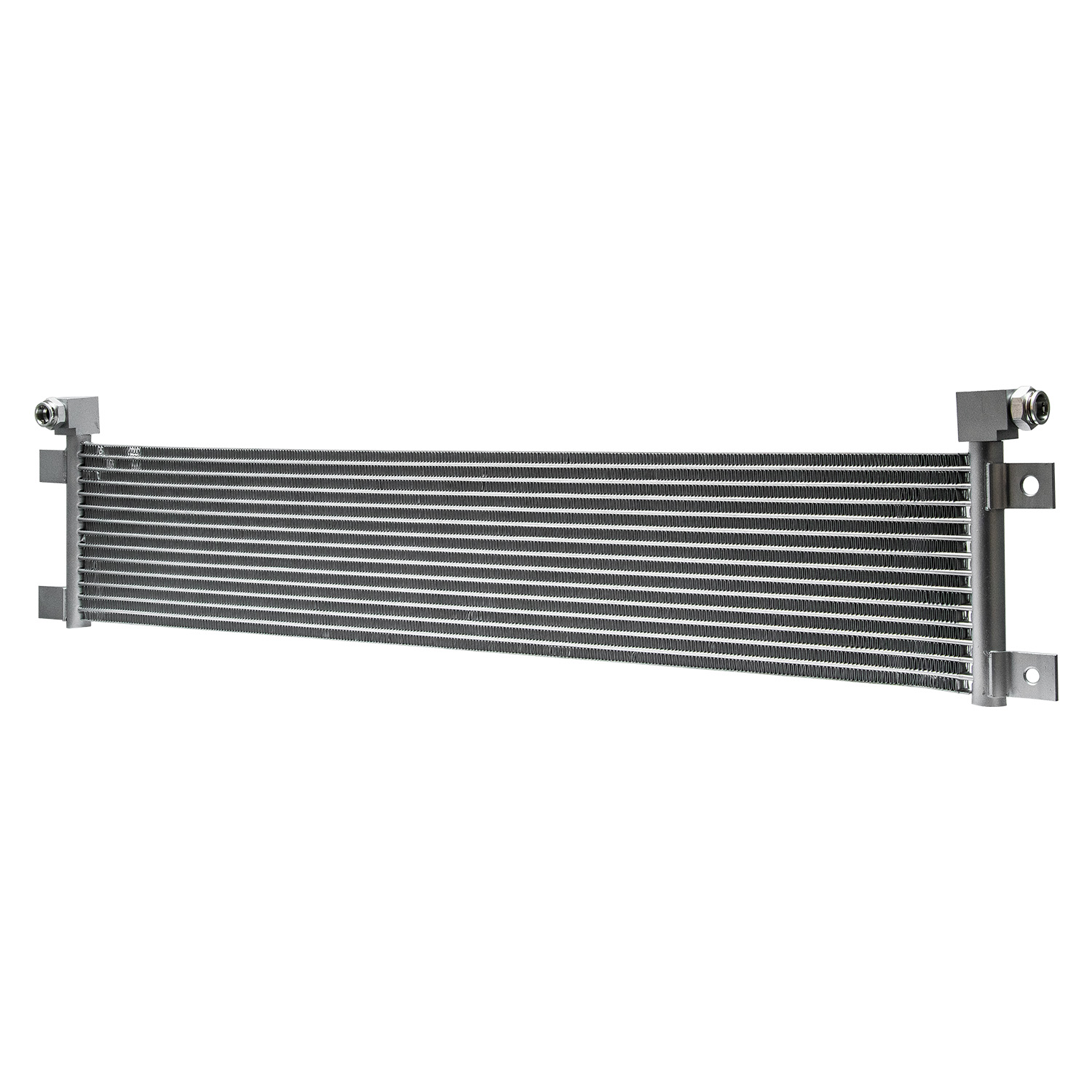
For OEM buyers responsible for sourcing components at scale, evaluating an oil cooler is far more complex than a single-unit retail purchase. The decision touches on thermal performance specifications, material durability, dimensional compatibility, and the supplier's ability to fulfill consistent quality across thousands of units. Getting this comparison process right from the start protects downstream production schedules and reduces the risk of field failures that carry significant warranty and reputational costs.
The oil cooler market offers a wide range of configurations — row counts, core dimensions, port sizes, and materials — that can appear similar on a datasheet but perform very differently under real operating conditions. OEM procurement teams must build a structured comparison framework that goes beyond price per unit and addresses the full spectrum of technical, logistical, and commercial criteria. This article walks through how experienced OEM buyers approach that comparison process for bulk procurement decisions.
Understanding the Technical Baseline for Oil Cooler Selection
Core Thermal Performance Parameters
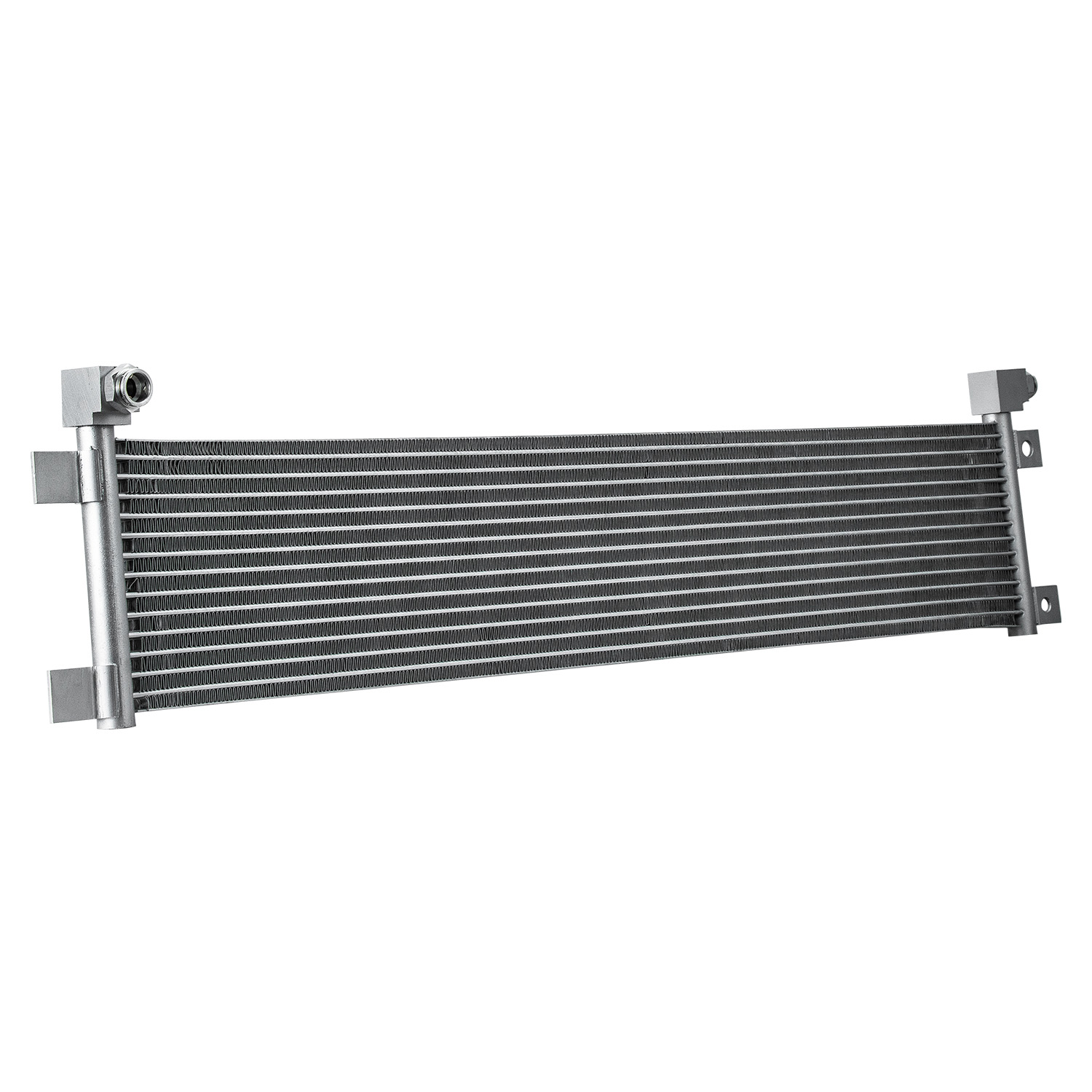
Before comparing suppliers or SKUs, OEM buyers must define a precise thermal performance baseline. An oil cooler is rated by its ability to dissipate heat from engine or transmission oil under specified flow rates, inlet temperatures, and ambient conditions. The number of rows in the core directly affects heat transfer surface area, which means a 15-row oil cooler will perform significantly differently from a 7-row or 10-row unit under the same operating load.
OEM engineers typically define a minimum heat rejection value in watts or BTU/hr, alongside an acceptable oil temperature differential across the cooler. These parameters become the non-negotiable floor for any oil cooler considered in the comparison. Suppliers who cannot provide certified test data matching the stated conditions should be removed from the evaluation early.
Flow resistance is another thermal parameter that often gets overlooked. An oil cooler with excellent heat dissipation but high internal pressure drop can strain oil pumps and affect system efficiency. Procurement teams should request pressure drop data at target flow rates alongside thermal performance figures to make a complete comparison.
Port Configuration and Dimensional Compatibility
In OEM assembly environments, dimensional precision matters as much as thermal output. The oil cooler must fit within the designated chassis or engine bay envelope, and the port orientation and thread specification must align with the existing plumbing layout. Common port standards in universal-fit oil coolers include AN fittings such as -10AN, which offer leak-resistant connections widely used in performance and commercial applications.
Buyers comparing multiple oil cooler options should create a dimensional checklist that includes overall length, width, height, mounting hole pattern, and port center spacing. Even small deviations from spec can cause costly re-engineering of brackets or hose routing at the assembly stage. Requesting physical samples or detailed 2D/3D drawings before committing to a bulk order is standard practice in disciplined OEM procurement.
Thread compatibility deserves particular attention when sourcing a universal oil cooler for multi-platform applications. If the same oil cooler variant will be used across different vehicle or equipment platforms, confirming that adapters or fittings are readily available from the same supplier helps reduce inventory complexity and simplifies the assembly workflow.
Material and Construction Quality as a Procurement Criterion
Aluminium Core Construction and Its Implications
The material composition of an oil cooler core is one of the most reliable indicators of long-term durability under OEM operating conditions. Aluminium is the dominant core material in high-performance and industrial oil cooler applications because it combines strong thermal conductivity with low weight. For OEM buyers, the specific alloy grade and the quality of the brazing or welding used in core assembly will determine whether units hold up over a service life measured in years rather than months.
When comparing oil cooler options in bulk procurement, buyers should ask suppliers for material certifications and core construction details. Extruded aluminium tubes with folded fins tend to offer better durability than pressed plate-and-fin designs in high-vibration environments. Burst pressure ratings and corrosion resistance data give procurement teams a measurable way to differentiate between products that look identical in marketing materials.
Surface treatment is another detail that separates quality tiers in aluminium oil cooler construction. Anodized or powder-coated finishes provide meaningful corrosion protection in applications exposed to road salt, moisture, or chemical contamination. OEM buyers sourcing for vehicles or equipment operating in harsh environments should specify surface treatment requirements as part of the procurement standard.
End Tank and Fitting Quality
The end tanks of an oil cooler are the structural connection points between the core and the fluid circuit. In low-quality units, end tanks may be thin-walled or poorly bonded to the core matrix, creating leak points under thermal cycling stress. For bulk OEM procurement, the quality of end tank construction is a critical long-term reliability factor that should be verified through burst testing data or third-party quality audits.
Fitting quality is equally important. AN fittings machined from billet aluminium with clean thread profiles resist galling and provide repeatable torque performance across thousands of assembly cycles. Buyers should evaluate whether the fittings supplied with an oil cooler meet the torque and pressure standards specified in their assembly documentation, rather than assuming compatibility based on nominal size alone.
Supplier Capability and Bulk Fulfillment Evaluation
Production Consistency and Quality Control Standards
One of the most important distinctions in OEM oil cooler procurement is the difference between a supplier that can fulfill a sample order well and one that can maintain the same quality standard at volume. Production consistency is evaluated through several indicators: whether the supplier holds relevant quality certifications, what statistical process controls are applied during manufacturing, and how defects are tracked and communicated across batches.
OEM buyers typically request first article inspection reports for a new oil cooler supplier relationship, followed by ongoing batch inspection reports tied to delivery. The inspection scope should cover critical dimensions, port thread quality, pressure testing results, and visual finish standards. Suppliers who resist providing this documentation or who cannot produce traceable inspection records are a procurement risk regardless of unit price.
Defect rate history is valuable data when available. A supplier with documented continuous improvement data and a low defective parts per million rate gives procurement teams confidence that bulk orders will not generate incoming quality failures that disrupt the assembly line. This information is worth requesting explicitly during the supplier qualification process.
Lead Time, MOQ, and Supply Chain Reliability
For bulk OEM procurement, the commercial terms around an oil cooler order are as important as the technical specifications. Lead time determines how far in advance procurement must plan orders to avoid production line shortfalls. Minimum order quantities affect inventory carrying costs and cash flow. Packaging standards determine how units arrive at the facility and whether there is damage risk during transit or warehousing.
OEM buyers comparing oil cooler suppliers should evaluate supplier lead times under both normal and peak demand scenarios. A supplier who quotes a standard lead time but cannot maintain it during high-demand periods creates planning risk. References from other OEM customers, or direct evidence of on-time delivery performance, are more reliable than lead time promises given at the RFQ stage.
Supply chain depth — meaning how many tiers of subcomponent supply the oil cooler manufacturer controls or has visibility into — also affects procurement risk. Suppliers who source their aluminium cores, fittings, and surface treatment from well-managed, audited sub-suppliers are less vulnerable to component shortages that could delay fulfillment of a large oil cooler order.
Price Comparison Methodology for OEM Oil Cooler Procurement
Total Cost of Ownership vs. Unit Price
OEM buyers who compare oil cooler options on unit price alone consistently underestimate the true procurement cost. A lower unit price on an oil cooler that generates higher field warranty rates, incoming inspection failures, or fitment issues in assembly will always cost more over the product lifecycle than a slightly higher-priced unit with demonstrated quality and consistency.
Total cost of ownership analysis for an oil cooler should include incoming inspection costs, assembly labor impact, warranty claim rates, return and replacement logistics, and any engineering costs associated with fitment deviations. When procurement teams build this complete cost model, the field between competing suppliers often narrows substantially, and the decision logic shifts from raw price to risk-adjusted value.
Volume discount structure is another cost lever worth evaluating carefully. Some oil cooler suppliers offer significant tiered pricing that rewards committed annual volumes, while others have flat pricing regardless of volume. Understanding the pricing structure upfront allows procurement teams to model cost scenarios across different forecasted volumes and negotiate more effectively.
Tooling, Customization, and NRE Costs
When an OEM application requires a customized oil cooler — whether in dimensions, port configuration, or branding — non-recurring engineering costs and tooling charges become part of the procurement comparison. Buyers should evaluate not just the tooling cost itself but also who retains ownership of the tooling, what the expected tooling life is, and what the lead time for design changes will be after initial production begins.
Some oil cooler suppliers offer universal platforms with modular customization options, which can reduce NRE costs significantly compared to fully bespoke designs. For OEM buyers sourcing across multiple vehicle or equipment platforms, a supplier with a broad universal oil cooler platform may offer better commercial flexibility than a specialist who only supports fully custom designs.
Qualification Testing and Approval Process
Incoming Validation and Pre-Production Testing
Before a new oil cooler source is approved for bulk OEM production, most manufacturers require a formal qualification process. This typically includes dimensional verification against the approved drawing, pressure testing to confirm burst and leak performance, and thermal testing under simulated operating conditions. The rigor of this process reflects the application criticality — a transmission oil cooler in a commercial vehicle application requires more extensive qualification than one used in a light-duty performance engine.
Buyers should define the qualification test plan as part of the procurement negotiation, so suppliers understand what technical evidence they must provide before a purchase order for full volume is issued. Suppliers experienced in OEM supply chains will recognize and accept this process; those unfamiliar with it may indicate limited experience serving serious production programs.
Durability testing — including thermal cycling, vibration, and accelerated corrosion exposure — gives OEM teams additional confidence that the oil cooler will perform over the intended service life. Not all procurement budgets allow for exhaustive durability testing, but at minimum, requesting supplier-conducted test data or third-party certification results helps bridge the gap between prototype approval and production confidence.
Supplier Audit and Ongoing Performance Monitoring
Qualifying an oil cooler supplier for a production program is not a one-time event. OEM procurement and quality teams typically conduct periodic supplier audits to verify that the manufacturing processes generating the approved oil cooler remain stable and under control. Audit scope usually covers production environment, inspection equipment calibration, worker training records, and change management procedures.
Ongoing supplier scorecards that track delivery performance, defect rates, and responsiveness to quality concerns give procurement teams early warning when a supplier relationship is deteriorating. For critical components like an oil cooler, proactive monitoring reduces the risk of a production disruption caused by a quality escape that went undetected through multiple shipments.
FAQ
What is the most important technical specification to compare when sourcing an oil cooler for OEM bulk procurement?
Thermal performance — specifically heat rejection capacity at the target flow rate and operating temperature — is the most important specification. An oil cooler that cannot meet the thermal requirement will cause downstream reliability problems regardless of how well it scores on price or lead time. All other comparison criteria should be evaluated against a confirmed thermal specification baseline.
How do OEM buyers verify oil cooler quality before committing to a large purchase order?
The standard approach is to request a pre-production sample and conduct incoming inspection covering dimensions, pressure testing, and visual quality. For higher-stakes applications, first article inspection reports and third-party test certifications provide additional assurance. Supplier facility audits and references from other OEM customers also help validate quality claims before a large oil cooler order is placed.
Should OEM buyers always choose the lowest unit price when comparing oil coolers?
No. Unit price is only one element of total procurement cost. Field warranty rates, incoming inspection failures, assembly fitment issues, and supply reliability all affect the true cost of an oil cooler sourcing decision. A slightly higher unit price from a supplier with proven production consistency and quality control often represents better value over the full product lifecycle than the lowest-bid option.
How does row count affect oil cooler selection for OEM applications?
Row count directly determines the heat transfer surface area of the oil cooler core. More rows mean greater capacity to dissipate heat, which is critical in high-load applications such as performance engines, transmission cooling in heavy vehicles, or equipment operating in high-ambient-temperature environments. OEM buyers should match row count to the validated thermal requirement rather than defaulting to the largest or most common configuration available.
Table of Contents
- Understanding the Technical Baseline for Oil Cooler Selection
- Material and Construction Quality as a Procurement Criterion
- Supplier Capability and Bulk Fulfillment Evaluation
- Price Comparison Methodology for OEM Oil Cooler Procurement
- Qualification Testing and Approval Process
-
FAQ
- What is the most important technical specification to compare when sourcing an oil cooler for OEM bulk procurement?
- How do OEM buyers verify oil cooler quality before committing to a large purchase order?
- Should OEM buyers always choose the lowest unit price when comparing oil coolers?
- How does row count affect oil cooler selection for OEM applications?