
 EN
Wheel spacers customized for specific vehicle platforms represent a critical component in modern automotive engineering and performance modification. Whether you drive a European luxury sedan, an American pickup truck, or an Asian sports car, the dimensional requirements for wheel spacers customized to your platform differ significantly based on bolt pattern, hub diameter, offset geometry, and brake caliper clearance. Understanding how wheel spacers customized solutions are engineered ensures proper installation, maintains safety integrity, and optimizes the visual and functional performance of your vehicle's suspension geometry.
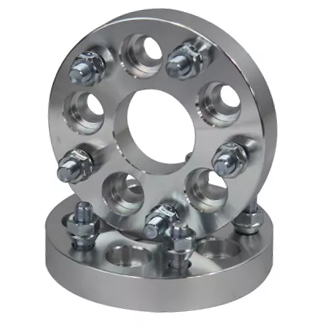
The process of creating wheel spacers customized for different vehicle platforms begins with precise measurement and engineering analysis. Each platform—from Mercedes-Benz and BMW to Ford and Toyota—requires wheel spacers customized with exact specifications that account for the unique characteristics of that vehicle's chassis, brake assembly, and suspension design. This article explores the engineering principles, measurement methodologies, and practical considerations that manufacturers and enthusiasts use to develop wheel spacers customized for safe, compatible, and visually appealing wheel fitment across diverse vehicle architectures.
Understanding Platform-Specific Bolt Pattern Requirements
Bolt Pattern Geometry and Hub Diameter Variations
The foundation of any wheel spacers customized solution begins with bolt pattern identification. Bolt patterns, expressed as diameter and bolt count (such as 5x112mm for many Mercedes vehicles), define where the wheel spacers customized adapter must interface with the vehicle's hub assembly. Different manufacturers use distinct bolt patterns; for example, Porsche traditionally uses 5x130mm, while many Japanese platforms employ 5x114.3mm spacing. Wheel spacers customized for your specific vehicle must match this pattern exactly, as even millimeter deviations compromise safety and wheel stability. Hub diameter—the center bore where the wheel center ring seats—also varies widely. Some wheel spacers customized designs feature hub rings or adapters that accommodate hub diameter differences when converting between platforms.
Precision is non-negotiable when wheel spacers customized products are manufactured. High-quality wheel spacers customized for professional use are typically produced from aluminum alloy or stainless steel, CNC-machined to tolerances within 0.1mm. This precision ensures that wheel spacers customized adapters fit consistently across multiple installations and maintain the structural integrity required for high-performance applications. When wheel spacers customized solutions are designed for European platforms, manufacturers must account for metric measurement standards, while American platforms often require inch-based tolerances.
Brake Caliper and Suspension Clearance Considerations
Brake system interference represents one of the most critical factors when wheel spacers customized solutions are engineered. Certain platform combinations require wheel spacers customized with specific thickness constraints because the brake caliper assembly sits close to the inner wheel edge. For instance, when wheel spacers customized products are designed for luxury European vehicles with large performance brake packages, manufacturers must ensure clearance between the spacer thickness and the caliper piston travel range. If wheel spacers customized thickness is excessive, brake line routing becomes problematic, and wheel removal and installation become difficult. Conversely, if wheel spacers customized specifications are too thin, the desired visual improvement may not justify the installation effort.
Suspension geometry also influences how wheel spacers customized adapters must be configured. Vehicles with air suspension systems or electronically adjustable chassis require wheel spacers customized to maintain acceptable suspension travel limits and prevent interference with lower control arms or strut housings. When wheel spacers customized solutions are applied to lifted trucks or lowered sports cars, the geometry changes compound, making precise wheel spacers customized engineering essential for preventing tire rub or alignment complications.
Engineering Offset and Fitment Variations Across Platforms
ET Offset and Load Rating Specifications
The offset (ET) rating of any wheel is determined by the distance from the wheel's hub-mounting surface to its centerline. When wheel spacers customized solutions are introduced, they effectively alter the wheel's final offset position relative to the vehicle's hub. If a vehicle typically accepts wheels with ET35 offset and wheel spacers customized spacing adds 20mm, the effective offset becomes ET15, pushing the wheel further outboard and potentially causing fender clearance issues. Manufacturers designing wheel spacers customized products must calculate the cumulative offset effect and specify maximum wheel sizes that safely accommodate the new geometry. Furthermore, wheel spacers customized products themselves must carry appropriate load ratings certified by engineering standards such as DIN or ISO specifications, ensuring they safely support the vehicle's weight plus dynamic forces during acceleration, braking, and cornering.
Different vehicle platforms tolerate offset changes differently based on their chassis design and intended use. Performance-oriented platforms may accommodate wheel spacers customized solutions more readily, while luxury or economy platforms with tighter packaging may have restrictive width tolerances. When wheel spacers customized engineers design for a specific platform, they must verify that the resulting wheel position maintains adequate suspension articulation, prevents contact with suspension components at full compression and extension, and keeps tire sidewalls within safe deflection parameters.
Multi-Platform Adapter Solutions and Universal Considerations
Some manufacturers develop wheel spacers customized as conversion adapters that allow wheels from one bolt pattern to fit vehicles with different patterns. These wheel spacers customized adapters feature dual-pattern hubs—for example, converting 5x114.3mm wheels to fit a 5x112mm vehicle. However, such wheel spacers customized conversion solutions require extremely precise engineering because load distribution and stress concentration become critical factors. A wheel spacers customized conversion adapter must handle the combined moments of wheel weight and braking torque without cracking or deforming. When wheel spacers customized conversion adapters are engineered, manufacturers conduct finite element analysis (FEA) to identify stress hotspots and optimize the design for durability and safety.
True universal wheel spacers customized products are rarely recommended for performance applications because each vehicle platform has unique load paths and stress characteristics. However, when wheel spacers customized solutions are engineered with adjustable thickness or modular design, they can serve multiple platforms within the same brand family or suspension architecture. Some wheel spacers customized manufacturers produce platform-specific kits rather than trying to create one-size-fits-all solutions, recognizing that optimal engineering always requires platform-specific attention and validation.
Manufacturing, Testing, and Installation Protocols for Platform-Specific Solutions
Quality Control and Validation Testing
Manufacturers of wheel spacers customized products implement rigorous quality control protocols to ensure consistency and safety. When wheel spacers customized items are produced, each unit undergoes dimensional verification to confirm bolt pattern accuracy, thickness tolerance, and center bore precision. Dynamic balancing is sometimes performed when wheel spacers customized products are intended for high-performance applications to ensure they don't introduce vibration when combined with wheels. Many wheel spacers customized manufacturers conduct fatigue testing on sample units, simulating millions of wheel revolutions at highway speeds to verify structural integrity and detect potential crack initiation points. Environmental testing is also common when wheel spacers customized solutions are engineered for diverse climates, ensuring that aluminum alloy compositions resist corrosion and maintain mechanical properties across temperature extremes.
Documentation accompanying wheel spacers customized products should clearly specify the vehicle platforms tested and approved for use. Reputable wheel spacers customized manufacturers provide detailed fitment guides listing compatible years, models, and engine variants, recognizing that within a single model line, different brake packages or suspension options may impose different requirements. When wheel spacers customized solutions are engineered conservatively, they often carry certifications from automotive standards organizations, providing additional assurance of quality and safety compliance.
Professional Installation and Post-Installation Verification
Proper installation of wheel spacers customized products requires following manufacturer specifications precisely. Technicians must verify that wheel spacers customized adapters are seated fully against the hub, that all fasteners are torqued to specification, and that no interference occurs between spacer components and nearby suspension or brake parts. When wheel spacers customized installation is complete, a test drive with careful attention to steering response, vibration, noise, and brake feel confirms that wheel spacers customized fitment is correct and safe. Alignment should be checked after wheel spacers customized installation because the slight geometry change can affect camber and toe settings, particularly on vehicles with sensitive suspension tuning.
Long-term reliability of wheel spacers customized solutions depends on periodic maintenance inspections. Technicians should verify that wheel spacers customized fastener torque remains secure and that no corrosion or stress cracking has developed. When wheel spacers customized products are installed in performance vehicles or vehicles exposed to harsh environments, annual inspections are prudent to maintain safety and optimize the lifespan of wheel spacers customized components.
FAQ
What factors determine how wheel spacers are customized for a specific vehicle platform?
Wheel spacers customized specifications are determined by bolt pattern geometry, hub diameter, brake caliper clearance, suspension design, offset requirements, and structural load paths unique to each vehicle platform. Engineers analyze the platform's chassis architecture, suspension components, and brake assembly to develop wheel spacers customized solutions that integrate safely without interference. The thickness, material composition, and hub adapter design of wheel spacers customized products all reflect these platform-specific requirements, ensuring that wheel spacers customized adapters maintain integrity under dynamic driving conditions.
Can wheel spacers customized for one vehicle platform be safely used on a different platform?
Using wheel spacers customized for one platform on a different vehicle is generally unsafe and not recommended. Even if bolt patterns appear similar, subtle differences in hub diameter, suspension geometry, brake assembly proximity, and load-bearing design mean that wheel spacers customized for Platform A may not function properly on Platform B. Attempting to adapt wheel spacers customized products across incompatible platforms risks brake interference, suspension misalignment, accelerated tire wear, and potential catastrophic failure during driving. Always use wheel spacers customized specifically for your vehicle's make, model, and year.
How do manufacturers ensure that wheel spacers customized products meet safety standards?
Manufacturers of wheel spacers customized solutions implement comprehensive testing protocols, including dimensional verification, fatigue analysis, stress modeling, and real-world validation testing. Wheel spacers customized products are engineered to load ratings certified by standards such as DIN or ISO, with documentation specifying compatible platforms and maximum wheel sizes. Reputable wheel spacers customized producers conduct ongoing quality inspections, maintain traceability records, and provide detailed fitment guides to ensure that wheel spacers customized installations are performed correctly and safely on approved vehicle platforms.