
 EN
EN
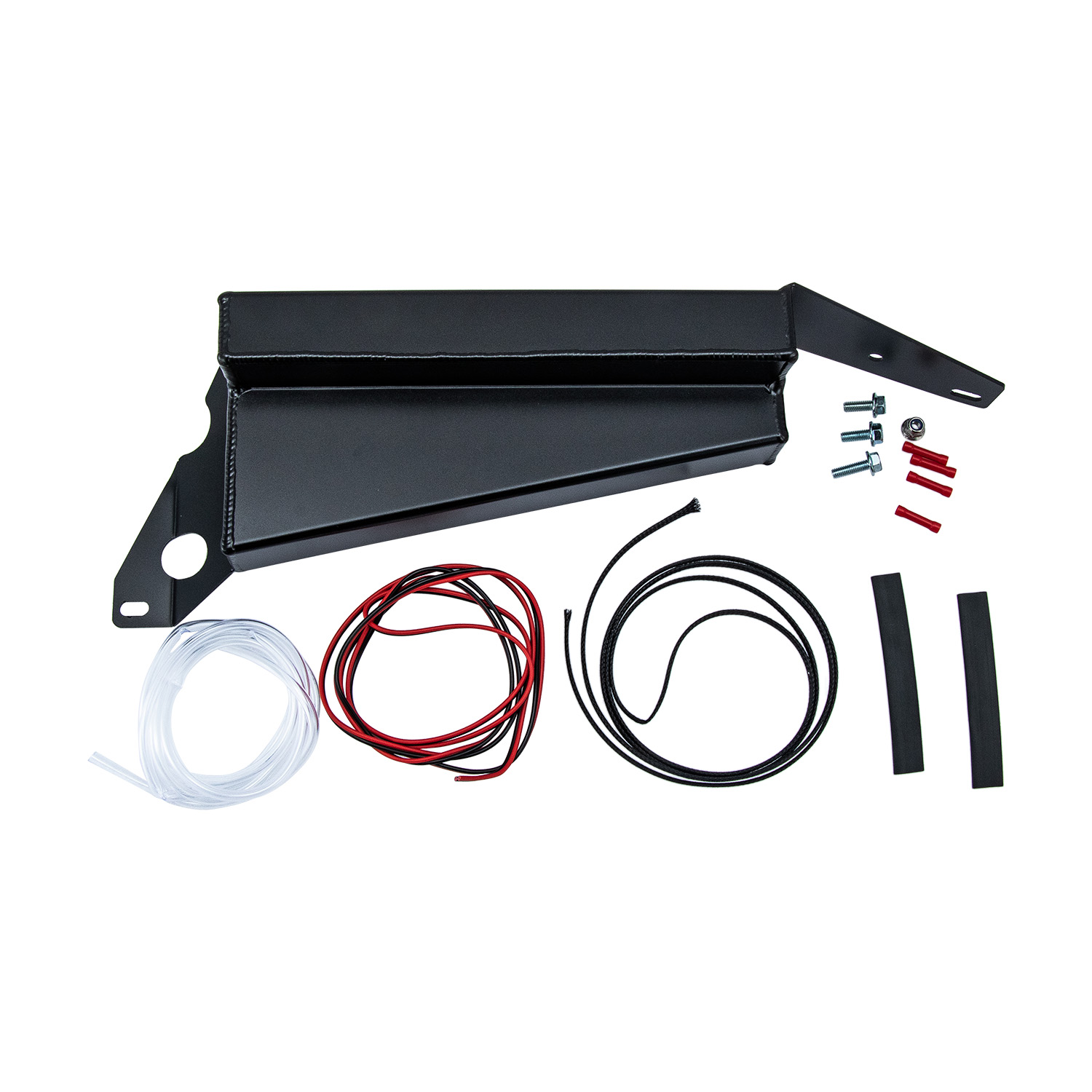
In heavy-duty automotive and industrial applications, an overflow tank serves as a critical pressure management component, capturing coolant that expands under thermal load and returning it safely to the cooling circuit. When this component fails — even through a minor seep — the consequences can range from coolant loss and engine overheating to complete drivetrain failure. This is precisely why the manufacturing standards applied during overflow tank production carry such significant engineering weight.
Factories that produce high-quality overflow tank assemblies invest deeply in process engineering, material science, and multi-stage quality verification to guarantee leak resistance throughout the product's operational lifespan. Understanding how these measures are applied — from raw material selection all the way through final hydrostatic testing — gives purchasing managers, engineers, and vehicle owners a far more confident basis for their procurement decisions. This article walks through the core factory-level strategies that define reliable overflow tank manufacturing.
Material Selection and Its Role in Leak Prevention
Why Base Material Matters in Overflow Tank Integrity
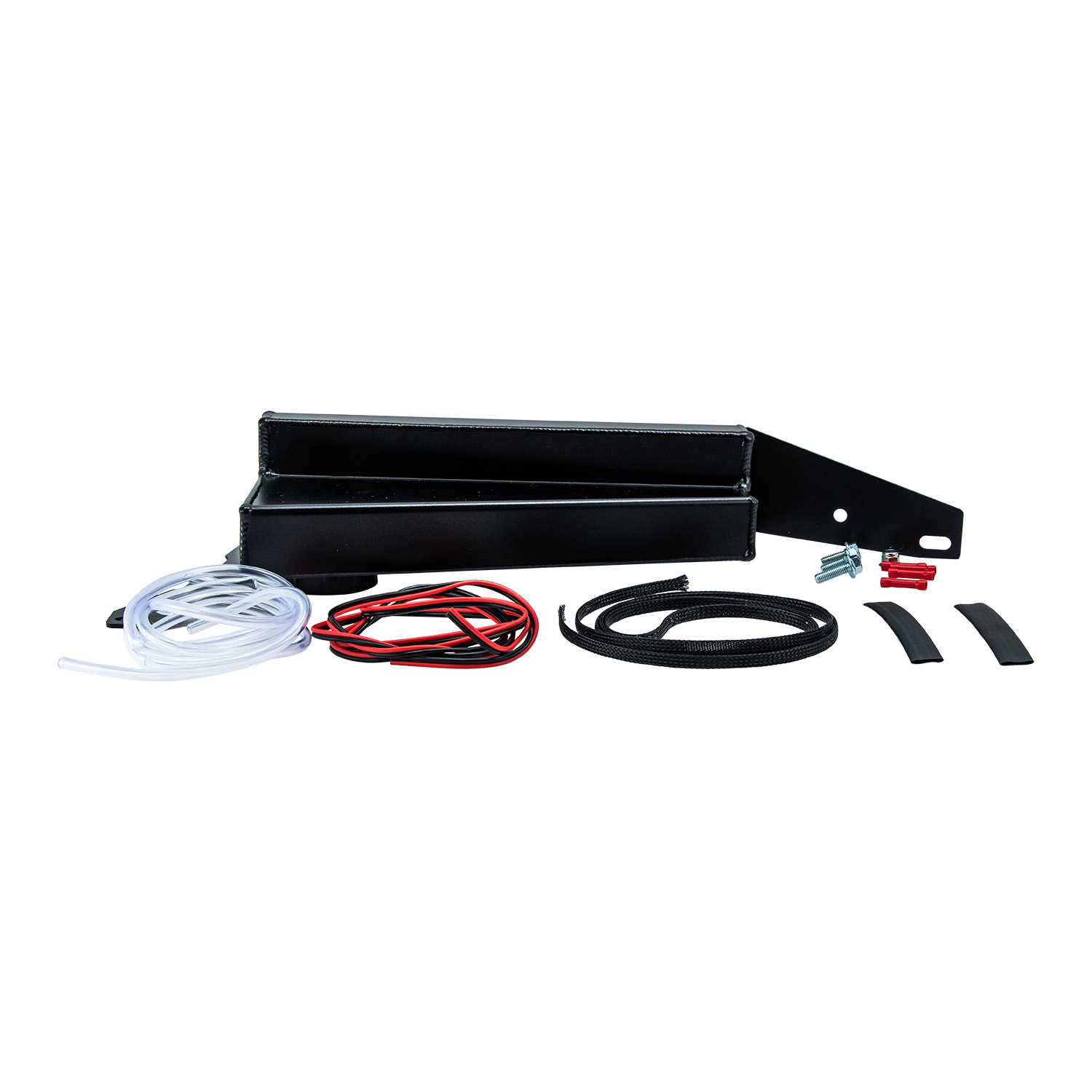
The foundation of any leak-resistant overflow tank is the material from which it is made. Factories choose between engineered polymers, aluminum alloys, and occasionally stainless steel depending on the intended application, pressure range, and thermal cycling demands. Each material presents a different risk profile when it comes to micro-fractures, weld porosity, and joint fatigue. In performance and off-road segments, aluminum is increasingly favored because it offers a superior strength-to-weight ratio while maintaining dimensional stability under repeated heat cycles.
An overflow tank fabricated from aluminum, for instance, resists the kind of creep deformation that plastic tanks can exhibit over time when exposed to sustained elevated temperatures. Factories sourcing aluminum sheet or extrusion stock for overflow tank production typically specify alloy grades that combine corrosion resistance with weldability. The selection of the wrong alloy — even one that appears dimensionally similar — can introduce microscopic grain boundary issues that only manifest as leaks after extensive thermal cycling in the field.
For polymer-based overflow tank designs, factories audit incoming resin batches for moisture content, molecular weight distribution, and additive consistency. Resin that has absorbed ambient humidity during storage can produce void inclusions during blow molding or rotational molding, creating pathways for eventual leakage. Material traceability documentation is therefore not a bureaucratic exercise — it is a direct leak-prevention measure.
Surface Preparation and Pre-Treatment Protocols
Even the highest-quality aluminum or polymer stock requires rigorous surface preparation before any joining or sealing operation can begin. Factories apply chemical degreasing, abrasive blasting, or anodizing pre-treatment to remove oxide layers, oils, and contaminants from mating surfaces. An overflow tank assembled over contaminated seam surfaces will almost certainly develop interfacial leaks within thousands of thermal cycles, regardless of how well the weld or bond itself is executed.
Pre-treatment steps are often timed and temperature-controlled, because the effectiveness of surface activation diminishes rapidly once complete. World-class factories monitor the interval between surface preparation and the joining step for every overflow tank moving through their production line. If that window is exceeded — even by a short period — the part is routed back through surface prep rather than proceeding to assembly.
Fabrication and Joining Techniques That Drive Leak Resistance
Welding Standards for Metal Overflow Tank Assemblies
For aluminum overflow tank production, TIG (Tungsten Inert Gas) welding is the dominant joining method in precision manufacturing environments. TIG welding allows fine operator control over heat input, bead profile, and penetration depth, reducing the risk of porosity and incomplete fusion that cause leaks. Factories supplying premium-grade overflow tank components to the automotive aftermarket maintain certified welders who undergo periodic recertification under defined welding procedure specifications.
Weld parameters — including travel speed, wire feed rate, shielding gas composition, and preheat temperature — are documented in procedure qualification records specific to each overflow tank configuration. Any deviation from these parameters triggers a hold and review process before the affected batch proceeds to pressure testing. This disciplined approach ensures that the structural continuity of every weld seam in the overflow tank meets the design intent consistently, batch after batch.
Factories also manage inter-pass temperature in multi-pass welds, preventing heat buildup that could cause distortion or precipitate grain boundary corrosion in aluminum alloys. A distorted weld joint in an overflow tank creates uneven stress concentration that accelerates fatigue cracking under vibration — a common failure mode in vehicle cooling systems exposed to rough terrain or engine vibration.
Sealing Methods for Ports, Fittings, and Caps
The weld seam is only one of several potential leak pathways in an overflow tank. Threaded ports, hose barb fittings, pressure cap seats, and drain plugs each represent a discrete sealing challenge. Factories address port sealing through a combination of thread form precision, O-ring groove geometry, and specified torque values. An improperly dimensioned O-ring groove in the cap seat of an overflow tank can cause the seal to extrude under pressure, immediately compromising leak resistance.
High-quality factories machine port interfaces to tight dimensional tolerances and verify groove dimensions with calibrated gauges at defined sampling intervals. The pressure cap seat of an overflow tank is often the highest-stress sealing location because it must open and close repeatedly across a wide pressure range while maintaining a consistent seal. Factories validate cap seat geometry against the rated pressure cap specifications to ensure that the sealing face angle and surface finish are compatible with the cap's sealing element.
Pressure Testing and Quality Verification Systems
Hydrostatic and Pneumatic Leak Testing Protocols
No overflow tank exits a quality-focused production facility without undergoing pressure testing. Factories employ hydrostatic testing — filling the tank with water or a water-glycol mix and pressurizing it to a defined test pressure — as the primary verification method. The test pressure for an overflow tank typically exceeds the maximum rated operating pressure by a specified factor, often between 1.5 and 2 times, to expose marginal welds or seals that might fail prematurely in service.
Pneumatic leak testing using pressurized air or nitrogen is used in conjunction with hydrostatic methods, particularly for detecting very fine porosity that water-based tests might bridge over. In air-pressure testing, the overflow tank is submerged in a water bath or coated with a detection solution, and any bubble formation locates the leak source with precision. Some advanced factories use electronic pressure decay systems that measure pressure drop over a timed hold period, providing a quantitative leak rate rather than a simple pass-fail visual result.
The test pressure hold time is also critical. An overflow tank might pass an instantaneous pressure check but show a slow pressure decay over several minutes that indicates a micro-leak. Factories that specify hold times aligned with industry standards provide substantially higher confidence in leak resistance than those relying on rapid spot checks.
Dimensional Inspection and Statistical Process Control
Leak resistance is not determined solely by testing the finished overflow tank — it is built in through dimensional control during fabrication. Factories implementing statistical process control (SPC) monitor critical dimensions such as wall thickness, weld bead profile, port thread pitch diameter, and cap seat surface finish across production runs. When control charts indicate a dimension drifting toward a specification limit, corrective action is triggered before out-of-specification overflow tank units are produced.
Coordinate measuring machines (CMM) and optical profilometers are deployed at key inspection gates for overflow tank components that carry the highest leak risk. Wall thickness uniformity is particularly important in aluminum tanks, where variations from nominal can create stress concentration zones that initiate fatigue cracks. Factories that invest in automated inspection equipment reduce their dependence on operator judgment for critical measurements, improving consistency and traceability.
Design Engineering Choices That Support Leak Resistance in Production
Joint Geometry and Weld Access in Overflow Tank Design
The physical design of an overflow tank profoundly affects how well it can be manufactured to resist leaks. Designs that require welding in confined corners, blind zones, or at acute angles make it nearly impossible for welders to achieve full-penetration, defect-free joints. Factories with strong engineering teams collaborate with design engineers during the product development phase to eliminate weld access constraints before tooling is committed.
A well-designed overflow tank positions its critical weld seams where welders can achieve proper torch angle, shielding gas coverage, and visual monitoring. Generous access also allows non-destructive examination (NDE) tools — such as dye penetrant or ultrasonic probes — to inspect completed welds without dismantling the assembly. This design-for-inspection philosophy is a hallmark of factories that treat leak resistance as an engineering objective rather than an afterthought.
Pressure Cap Compatibility and System-Level Leak Management
An overflow tank does not operate in isolation — it functions as part of a pressurized cooling circuit that includes a radiator, thermostat, coolant hoses, and a pressure cap. Factories producing leak-resistant overflow tank assemblies design the cap seat and filler neck geometry to be compatible with standardized pressure cap ratings common to the target vehicle application. A mismatch between the cap's relief pressure and the tank's rated burst pressure creates a systemic leak risk that no amount of weld quality can overcome.
For applications such as the overflow tank designed for Land Rover Defender platforms, factories must account for the specific operating pressures and temperature ranges common to those vehicles. Engineering the filler neck angle, hose connection orientations, and baffle geometry to match the original equipment layout ensures that the replacement unit integrates without tension on hose connections — another common source of field leaks that originates from improper fit rather than poor manufacturing quality.
FAQ
What is the most common cause of leaks in an overflow tank?
The most frequent causes of leaks in an overflow tank include weld porosity in metal units, stress cracking in polymer units from UV or chemical exposure, worn or improperly seated pressure cap seals, and fatigue cracks at port interfaces subjected to repeated vibration. Thermal cycling over many years also degrades polymer tanks, making them susceptible to hairline fractures that develop into active leaks. High-quality manufacturing processes address each of these failure modes through material selection, controlled welding, and rigorous testing.
How do factories verify that a new overflow tank design is leak resistant before mass production?
Factories typically subject prototype overflow tank designs to a series of validation tests including thermal cycling tests, vibration endurance tests, and burst pressure tests before approving a design for production. These tests simulate years of operating conditions in an accelerated timeframe. Only after prototype units pass all defined acceptance criteria — including leak testing at multiples of the rated operating pressure — does the factory commit tooling and begin producing the overflow tank at scale.
Can an overflow tank develop leaks even after passing factory pressure testing?
Yes, an overflow tank that passes factory pressure testing can still develop leaks in service if exposed to conditions beyond its design envelope, such as operating with an incorrectly rated pressure cap, physical impact damage, chemical incompatibility with the coolant used, or improper installation that induces hose tension stress on fittings. This is why correct installation, compatible pressure cap selection, and approved coolant chemistry are all essential complements to high factory quality standards.
Why is aluminum increasingly used in overflow tank production for off-road and performance vehicles?
Aluminum offers several specific advantages for overflow tank applications in demanding vehicle categories. It maintains dimensional stability across a wide thermal range, resists the creep deformation that polymer tanks can exhibit at sustained high temperatures, and can be welded to produce seams that, when properly executed, exceed the parent material strength. Aluminum also allows for thicker wall sections in high-stress zones without the weight penalty of steel, making it the material of choice for premium overflow tank products targeting off-road, towing, and performance applications.
Table of Contents
- Material Selection and Its Role in Leak Prevention
- Fabrication and Joining Techniques That Drive Leak Resistance
- Pressure Testing and Quality Verification Systems
- Design Engineering Choices That Support Leak Resistance in Production
-
FAQ
- What is the most common cause of leaks in an overflow tank?
- How do factories verify that a new overflow tank design is leak resistant before mass production?
- Can an overflow tank develop leaks even after passing factory pressure testing?
- Why is aluminum increasingly used in overflow tank production for off-road and performance vehicles?